SIEMENS
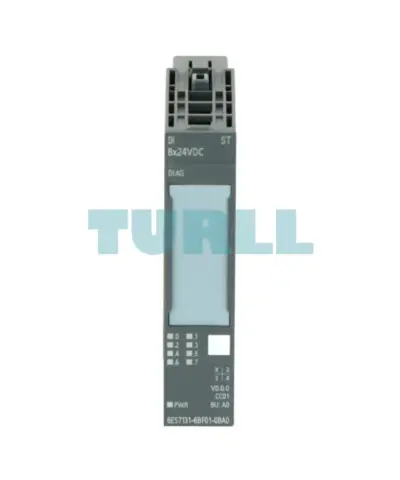
Siemens 6ES7131-6BF01-0BA0 SIMATIC ET 200SP Digital Input Module DI 8x24V DC Original Brand New
6ES7131-6BF01-0BA0
Original price was: $91.24.$42.45Current price is: $42.45.
In stock
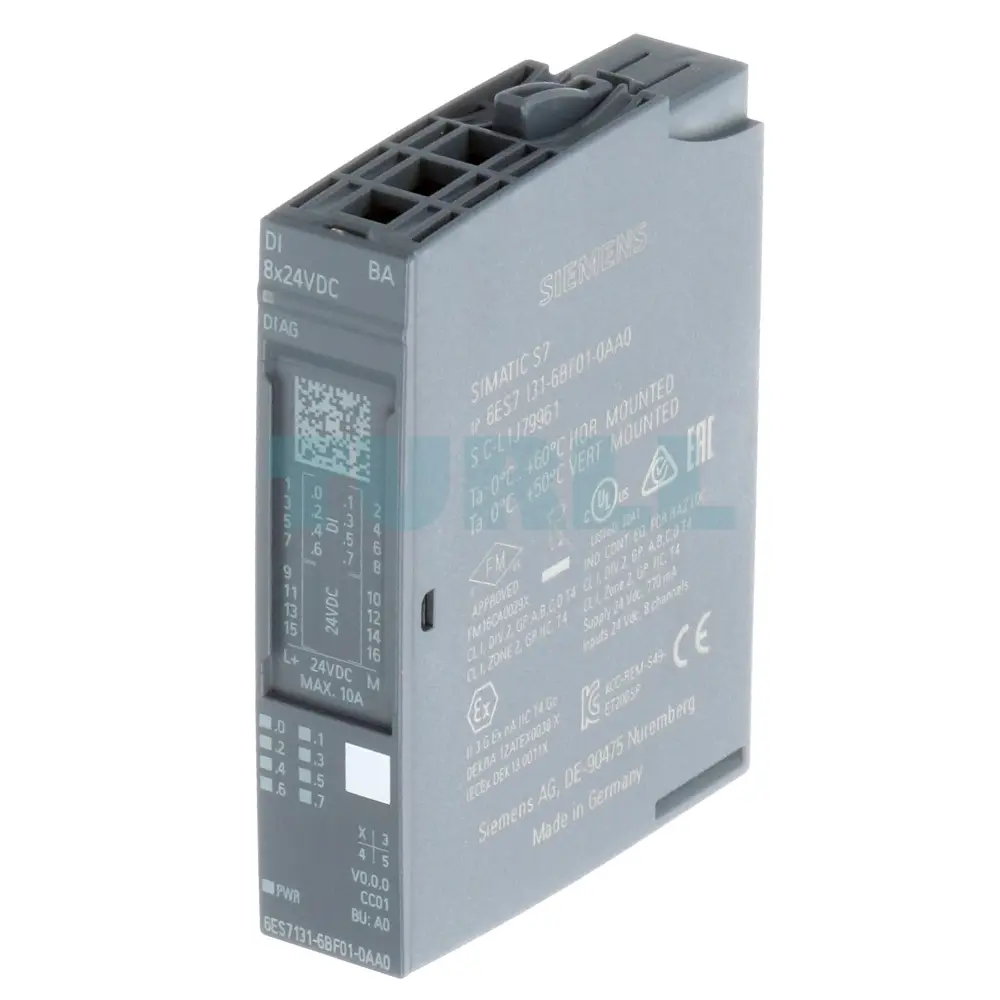
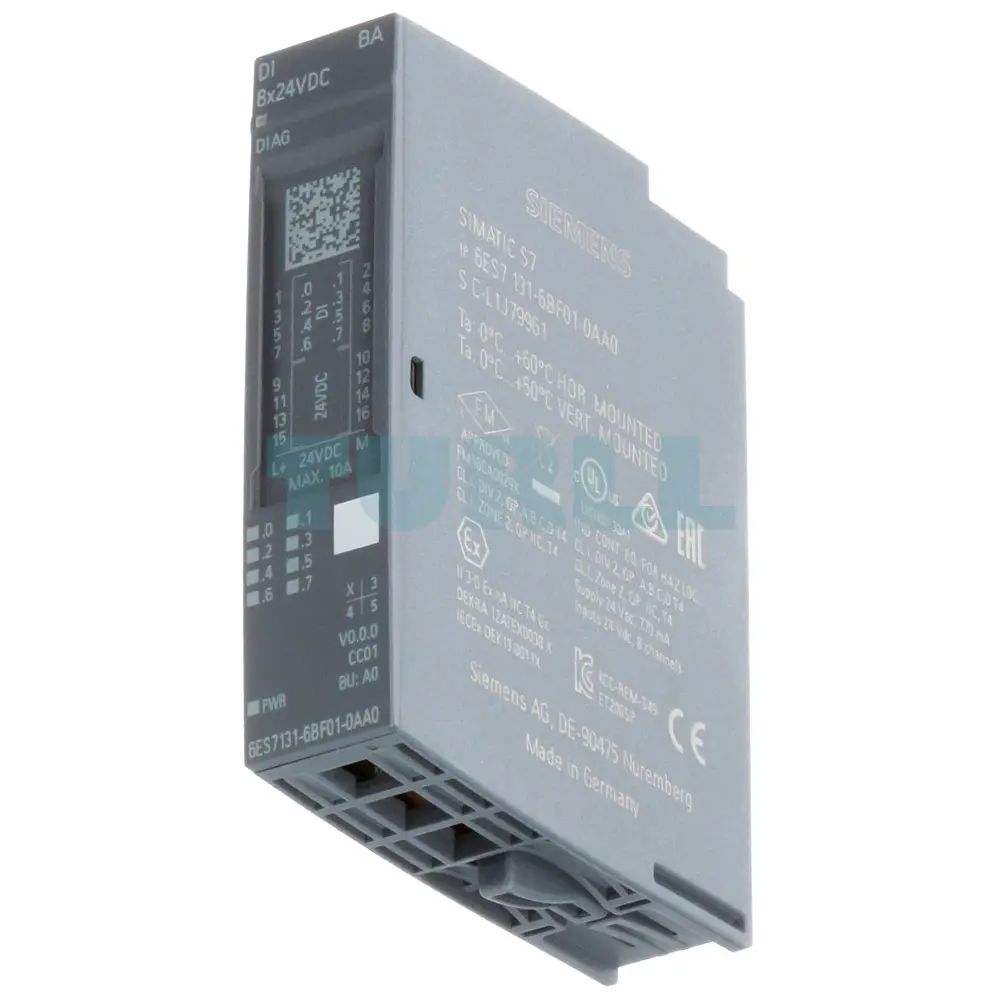
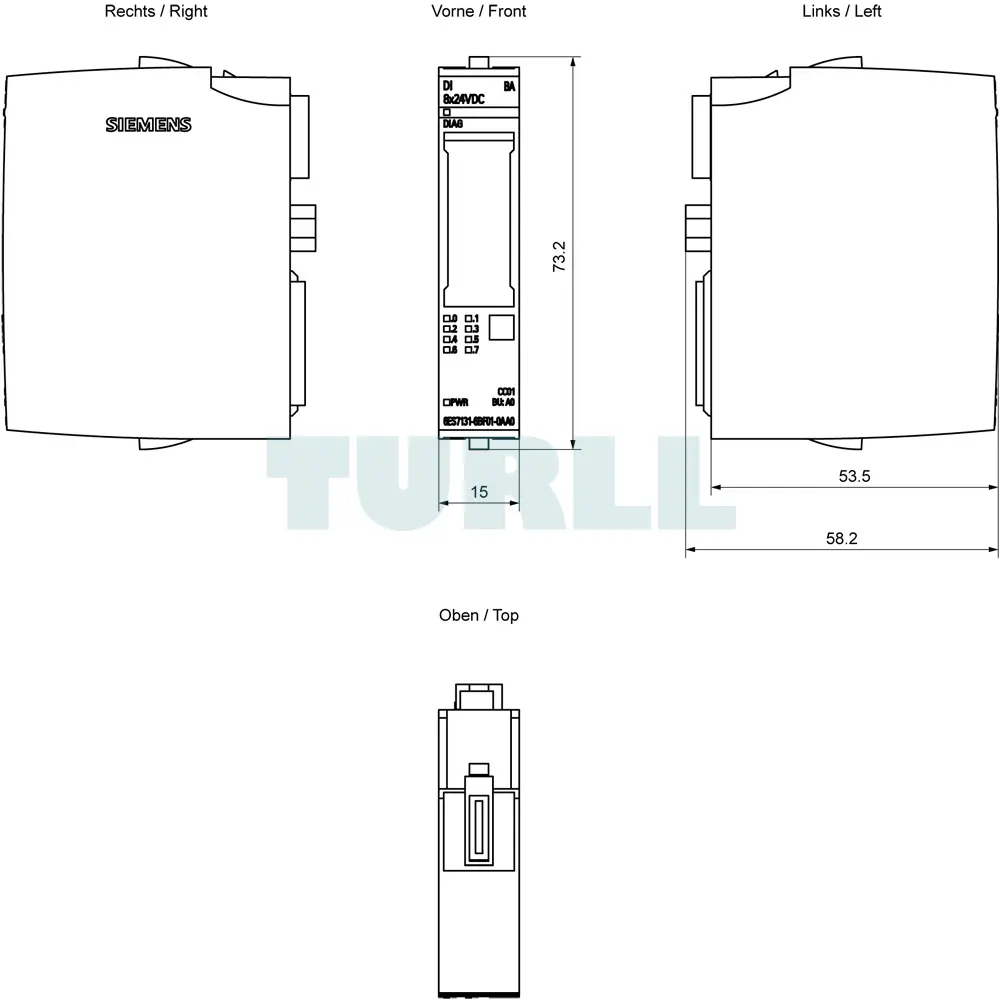
6ES7131-6BF01-0AA0 Siemens
SIMATIC ET 200SP, Digital input module, DI 8x 24V DC Basic, type 2 (IEC 61131), sink input, (PNP, P-reading), Packing unit: 1 piece, fits to BU-type A0, Colour Code CC01, input delay time 0,05..20ms, module diagnostics for: supply voltage
BaseUnits with an appropriate number of terminals are available for single or multi-conductor connection.
All variants that correspond to the BU type of the I/O module used can be used as BaseUnits (see Selection and ordering data). The BaseUnits that can be used for the respective module are noted on the front side of the module.
With the new potential distributor modules for SIMATIC ET 200SP, additional potentials required within an ET 200SP station can be set up quickly and in a space-saving manner. Due to the free combinability of PotDis-BUs and PotDis-TBs, the potential distributor modules allow a large number of design variants and thus simple adaptation to individual needs.
Within the station, existing potentials can be multiplied or even new potential groups can be formed. With 36 terminals per 15 mm width, the PotDis modules require very little space without compromising on the conductor cross-sections (maximum 2.5 mm²). They allow the connection of voltages up to 48 V DC with a maximum current carrying capacity of 10 A, and with the PotDis-TB-BR-W even up to 230 V AC/10 A as well as the possibility to connect a protective conductor.
Typical applications for the PotDis modules in connection with DI modules are:
A light BU separates the self-assembling, internal voltage buses (P1, P2, AUX) and thus opens a new potential group. The supply voltage of a potential group must be fed in at the light BU of this potential group.
A dark BU forwards the supply voltage of the adjacent light BU on the left via the self-assembling voltage buses P1, P2 and AUX. A new infeed is therefore only required on the next light BU to the right. The setting of a further light BU is required whenever
The potentials at the terminals of the BaseUnit are defined by the inserted I/O module in each case. To prevent wiring faults, the potentials of the terminals can optionally be identified by means of module-specific color-coded labels. The color-coded label that matches the respective I/O module is defined by the color code CCxx of the I/O module. This color code is also printed on the front of the module.
In BaseUnits with the additional ten internally jumpered AUX terminals, these can also be identified with color-coded labels. For the ten AUX terminals, color-coded labels are available in red, blue, and yellow/green.
Visit 6ES7131-6BF01-0AA0
For more products visit turll.com
| SKU / Model | 6ES7131-6BF01-0AA0 |
|---|---|
| Weight | 0.034 kg |
| Dimensions | 68 × 78 × 24 mm |
Request a quote for project quantities, discontinued or obsolete models, and pro-forma invoice / bank transfer orders. Our sourcing team responds fast.