[ez-toc]
Overview
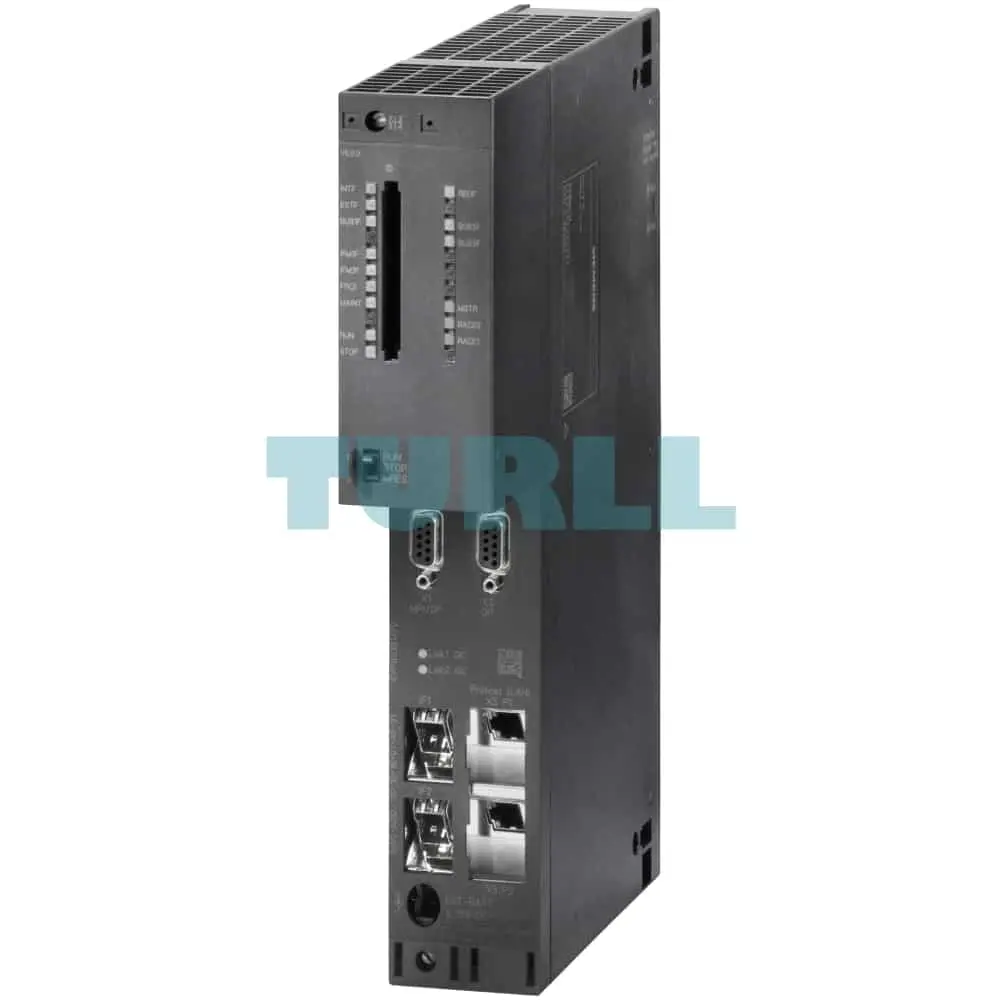
- CPU for SIPLUS S7-400H
- Usable in high-availability systems such as the S7-400H
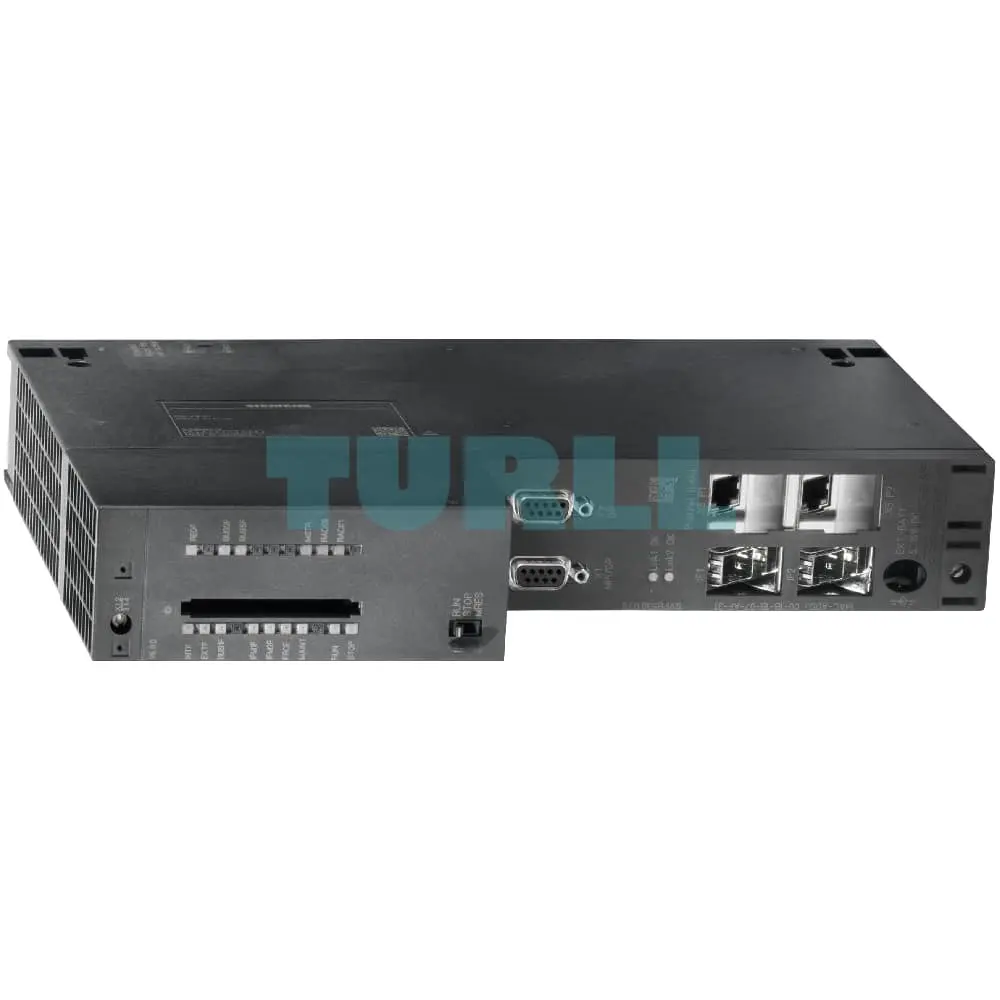
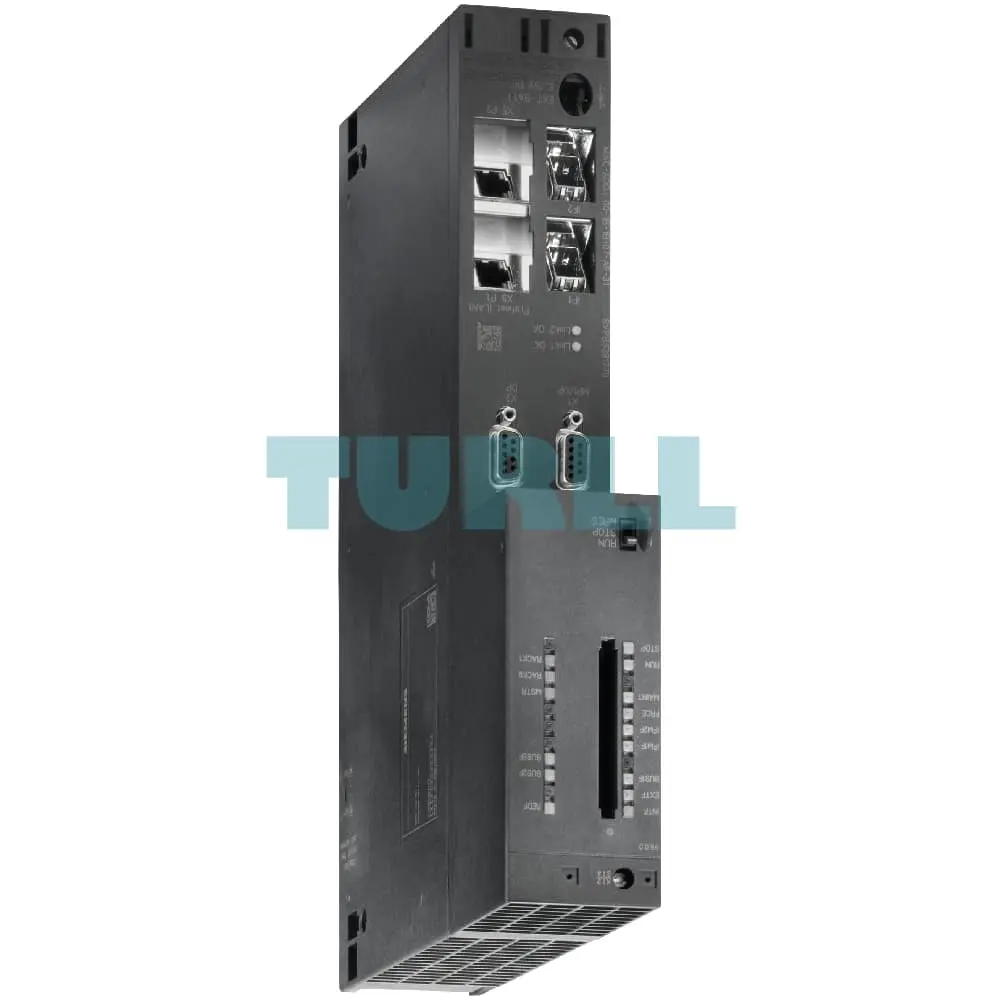
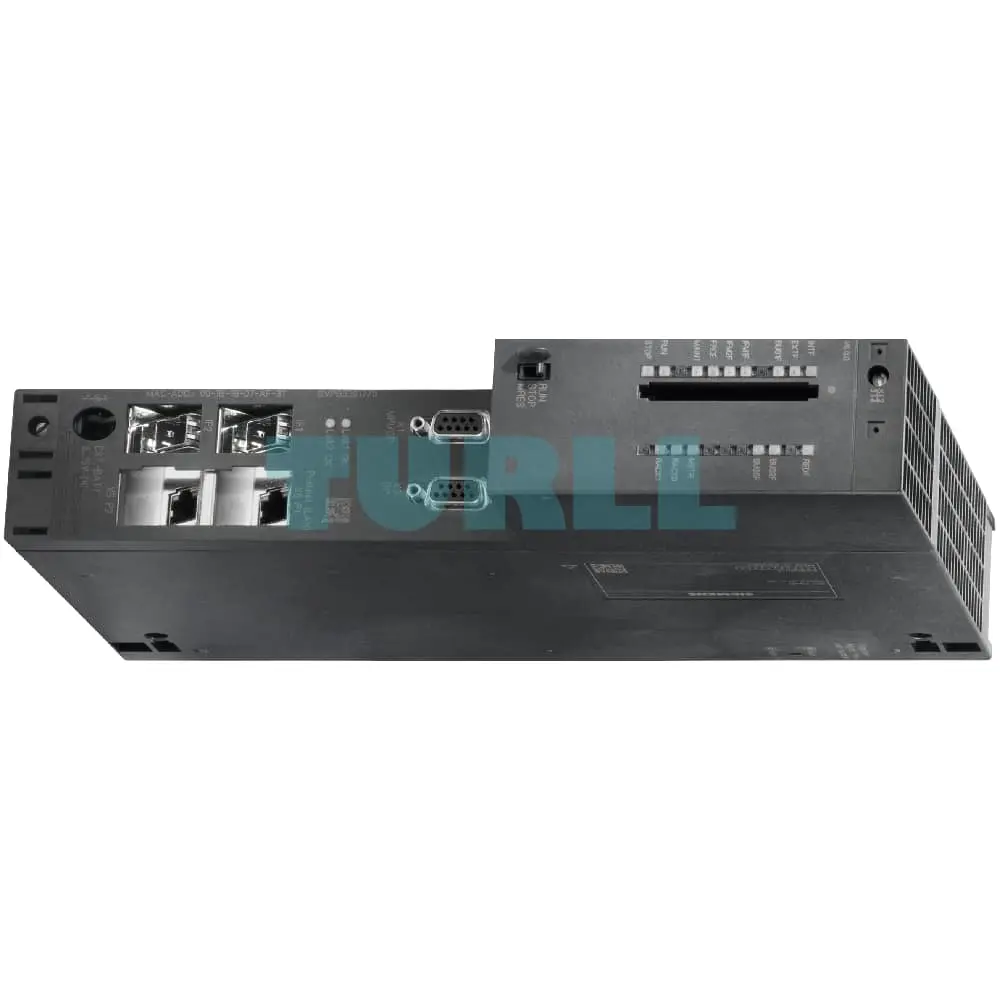
- With integrated PROFIBUS DP master and combined MPI/PROFIBUS DP master interface
- With integrated PROFINET interface (2-port switch)
- Features 2 slots for sync modules
Note:
SIPLUS extreme products are based on SIMATIC standard products. The contents listed here were taken from the respective standard products. SIPLUS extreme specific information was added.
Application
The CPU 416-5H can be used for SIMATIC S7-400H.
The integrated PROFIBUS DP interfaces enable direct connection as master to the PROFIBUS DP fieldbus.
The integrated PROFINET interface with switch functionality forms the basis for providing 2 externally accessible PROFINET ports. In this way, linear or ring structures can be implemented.
Design
The CPU 416-5H has:
- A powerful processor:
The CPU achieves command execution times as low as 12.5 ns per binary command.
- 16 MB RAM (6 MB for programs, 10 MB for data):
Load memory for user programs and configuration data for the S7-400H automation system; Fast main memory for subroutines of the user program that are relevant to the process.
- A memory card:
For expanding the integrated load memory. In addition to the program itself, the information contained in the load memory also includes configuration data for the S7-400H, which is why it takes up twice as much space in the memory. The result is that:
- The integrated load memory is not sufficient for large programs, which is why the memory card is often required.
RAM and FEPROM cards are available (FEPROM for saving data even when power supply is disconnected).
- Flexible expansion options:
Up to 262 144 digital and 16 384 analog inputs/outputs.
- Multi-point interface MPI:
The MPI enables the creation of a simple network with up to 32 nodes and a data transfer rate of 187.5 kbit/s. The CPU can establish up to 64 connections to nodes on the communication bus (C bus) and the MPI.
Note:
If PROFIBUS DP and MPI interfaces are being used simultaneously, only the following bus connectors can be connected to the MPI interface:
- With socket: 6ES7 972-0BB42-0XA0
- Without socket: 6ES7 972-0BA42-0XA0
- PROFIBUS DP interface:
The PROFIBUS DP interface allows a redundant, distributed automation configuration offering high speed and ease of use. From the user's point of view, the distributed I/Os are treated like centralized I/Os (same configuring, addressing and programming).
- PROFINET interface with 2 ports (switch):
Support of system redundancy and MRP (Media Redundancy Protocol)
- Mode selector:
Designed as a toggle switch.
- Diagnostics buffer:
The last 120 alarm and interrupt events are stored in a ring buffer for diagnostic purposes.
- Real-time clock:
Diagnostics reports from the CPU are provided with the date and time.
- PROFIBUS DP interface:
The CPU 416-5H with PROFIBUS DP master interface enables distributed automation to be established at high speed and with easy operation. From the user's point of view, the distributed I/Os are treated like centralized I/Os (same configuring, addressing and programming).
Note:
If PROFIBUS DP and MPI interfaces are being used simultaneously, only the following bus connectors can be connected to the MPI interface:
- With socket: 6ES7 972-0BB42-0XA0
- Without socket: 6ES7 972-0BA42-0XA0
Function
- Block protection:
In addition to the keyswitch, a password concept protects the user program from unauthorized access. User blocks can also be protected by an encryption mechanism.
- Integrated HMI services:
For HMI devices, the user only has to specify the source and destination for the data. They are then automatically transported by the system on a cyclic basis.
- Integrated communication functions:
- PG/OP communication
- Extended communication (standard and high-availability)
- Master-spare switchover programmed by user
Parameterizable attributes
With the STEP 7 "Hardware Configuration" tool and the installed S7-400H option package, the properties and behavior of the S7-400H including the CPUs can be parameterized, e.g.:
- MPI multi-point interface:
- Determination of node addresses
- Start-up/cyclic response
- Determination of maximum cycle time and communication load
- Address assignment:
Addressing of I/O modules
- Retentive areas:
Determination of number of retentive bit memories, counters, timers, data blocks and clock memories
- Protection level:
Specifying the access rights to programs and data
- System diagnostics:
Determination of handling and scope of diagnostic alarms
- Cyclic interrupts:
Setting of periodicity
- Configuration of H stations
Display and information functions
- Status and error LEDs:
LEDs indicate, for example, internal and external faults and operating statuses such as RUN, STOP, startup and "Master" operating mode as well as redundancy errors and test functions.
- Test functions:
The PG is used to indicate signal states during program execution, to modify process variables independently of the user program, to output the contents of stack memories, to execute individual program steps, and to block program sections.
- Information functions:
The PG can be used to obtain information about the memory capacity and operating mode of the CPU and the current loading of the work and load memory.
6AG1416-5HS06-7AB0
Siemens SIPLUS S7-400 CPU 416-5H based on 6ES7416-5HS06-0AB0 with conformal coating, -25…+70 °C, central processing unit for S7-400H and S7-400F/FH, 5 interfaces: 1x MPI/DP, 1x DP, 1x PN and 2 for SYNC modules, 16 MB memory (512 KB data/512 KB program)
Visit 6AG1416-5HS06-7AB0
For more our products visit turll.com