[ez-toc]
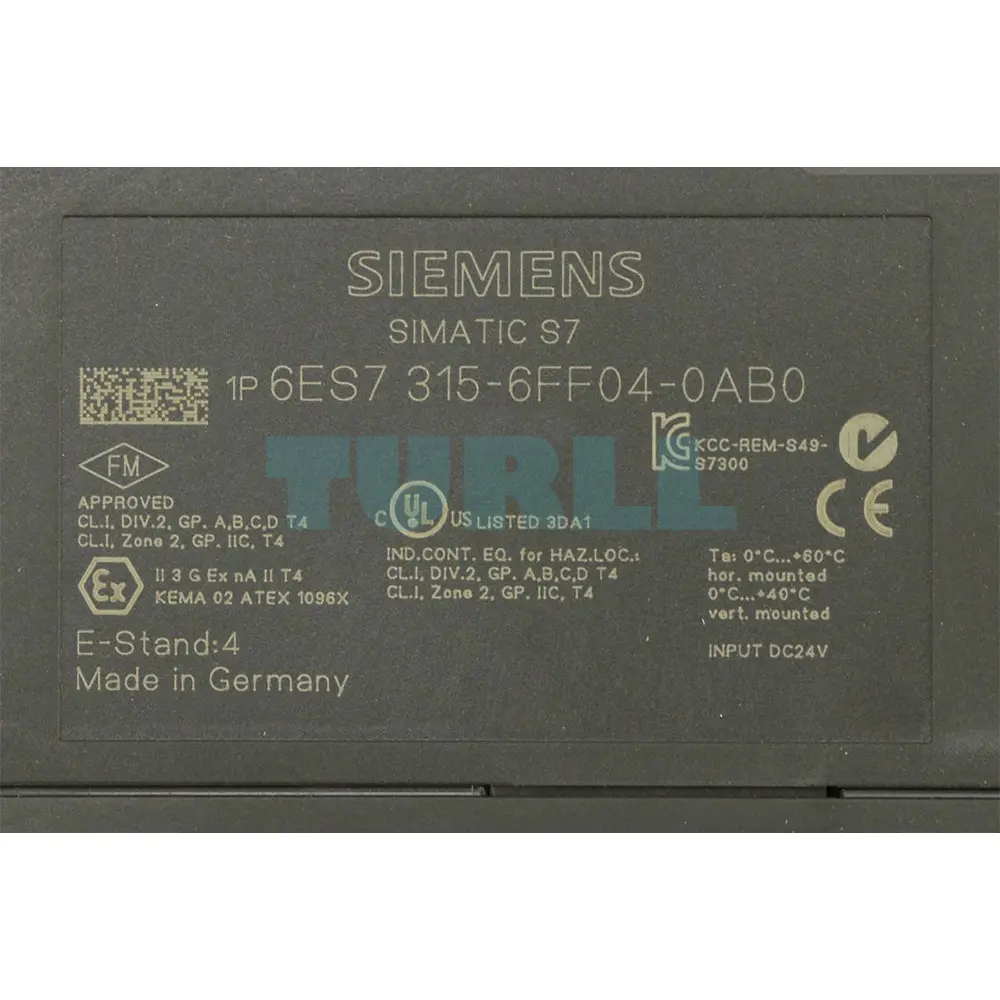
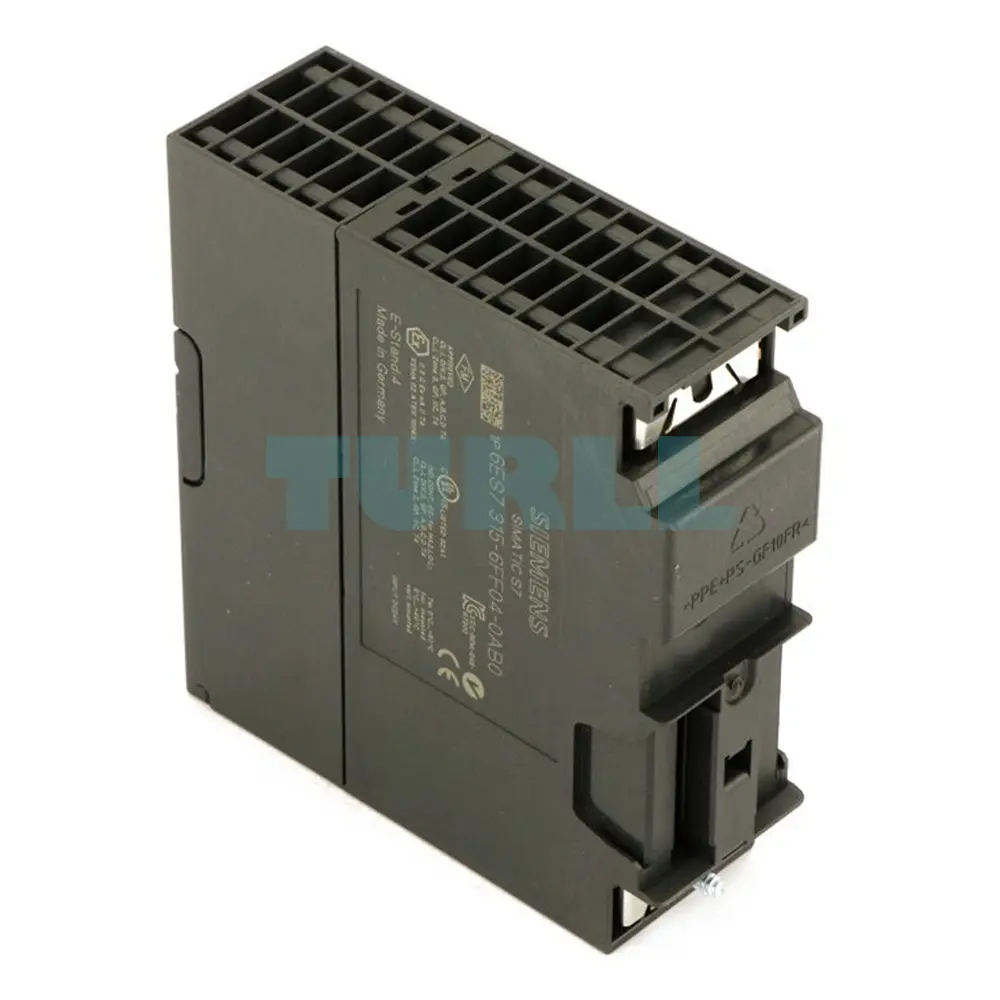
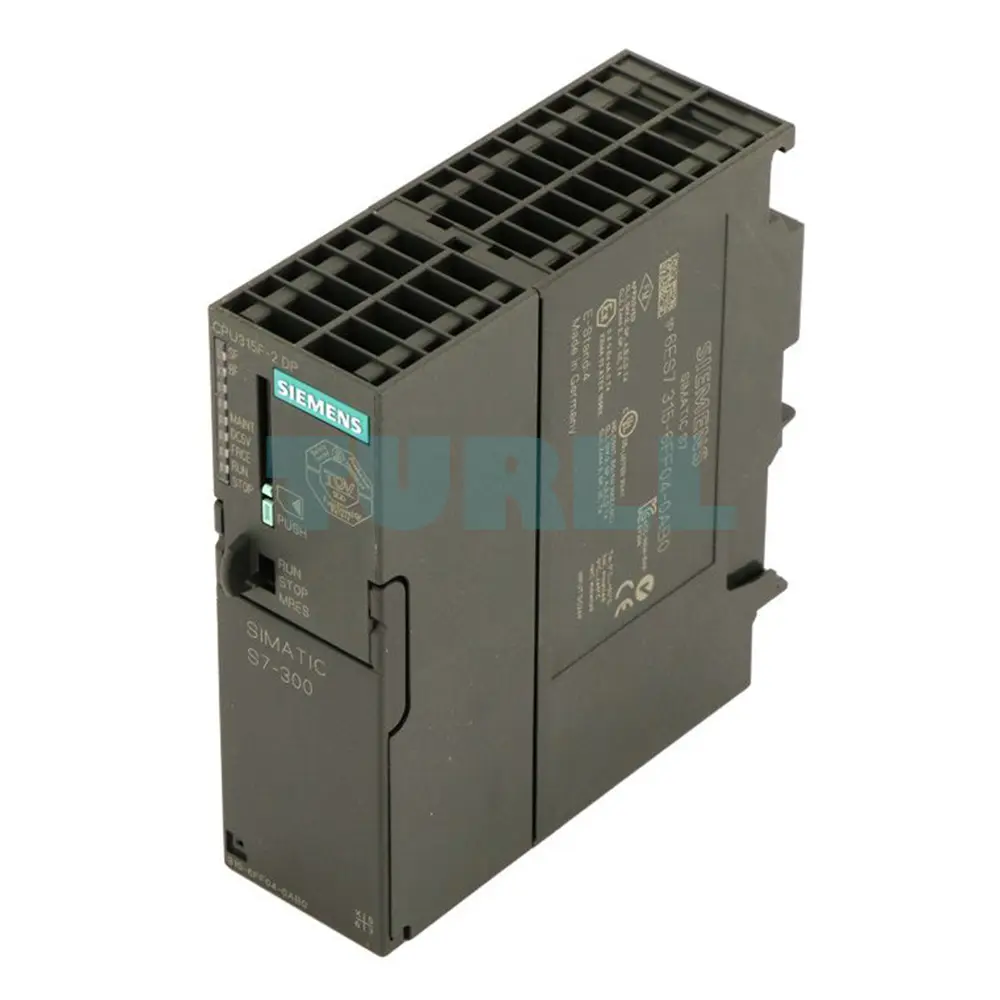
6ES7315-6FF04-0AB0
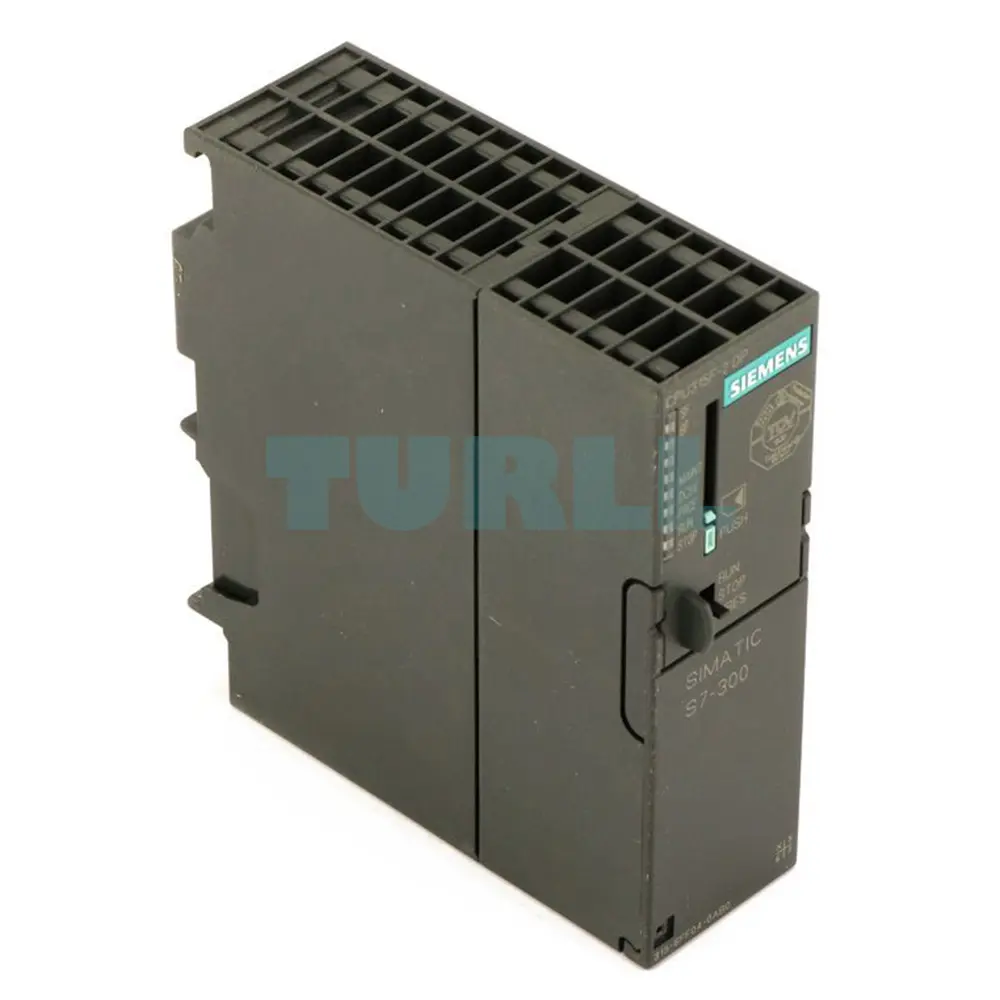
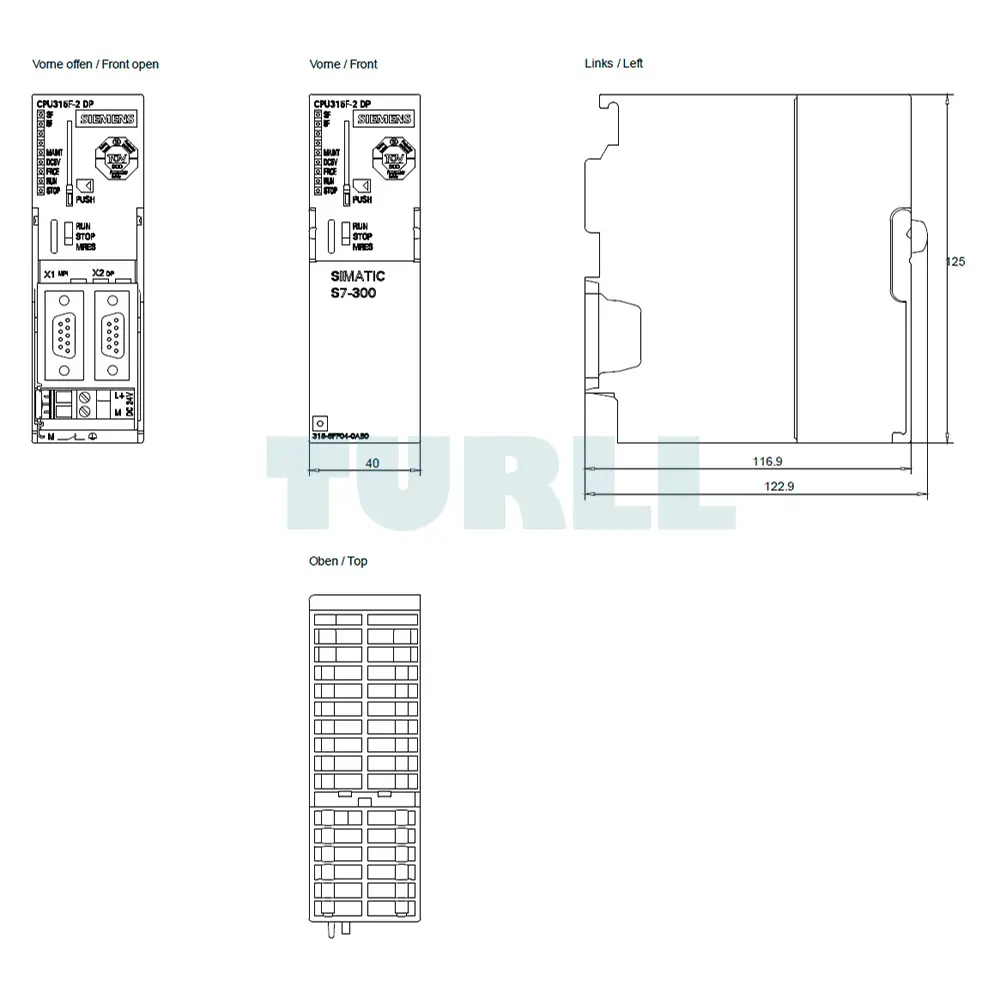
Siemens SIMATIC S7-300, CPU 315F-2DP Fail-safe module with MPI Integr. power supply 24 V DC, Work memory 384 KB, 40 mm width, 2nd interface DP master/slave Micro Memory Card required
Overview
- Based on the SIMATIC CPU 315-2 DP
- For constructing a fail-safe automation system for plants with increased safety requirements
- Complies with safety requirements to SIL 3 acc. to IEC 61508 and PL e acc. to ISO 13849.1
- Distributed fail-safe I/O modules can be connected locally via the integrated PROFIBUS DP interface (PROFIsafe)
- Fail-safe ET 200M I/O modules can also be centrally connected
- Central and distributed use of standard modules for non safety-oriented applications
SIMATIC Micro Memory Card required for operation of CPU.
Application
The CPU 315F-2 DP permits the design of fail-safe automation systems for plants with increased safety requirements, especially for production engineering.
Distributed I/O stations containing fail-safe I/O modules can be connected through the integrated PROFIBUS DP interface. The fail-safe ET 200M I/O modules can also be installed in central and safety-related configurations.
Safety-related communication between the F CPU and the fail-safe I/O modules is performed on the basis of the PROFIsafe profile.
Design
The CPU 315F-2 DP features the following:
- Microprocessor;
the processor achieves a processing time of approximately 50 ns per binary instruction and 0.45 µs per floating-point operation. - Memory:
384 KB high-speed RAM for safety-relevant and standard program sections; increased memory space requirements must be expected (5 times larger) if safety-relevant program sections are implemented. Of the 384 KB RAM, 128 KB data memory can be used for standard applications. SIMATIC Micro Memory Cards (max. 8 MB) as load memories for programs additionally permit storage of the project (including symbols and comments) in the CPU. - Flexible expansion capability;
max. 32 modules, (4-tier configuration) - MPI multi-point interface;
the integrated MPI interface can establish as many as 16 connections simultaneously to S7-300/400 or to the PG, PC, OP. Among these connections, one is always reserved for programming devices and another for OPs. The MPI makes it possible to set up a simple network with a maximum of 16 CPUs via “global data communication”. - PROFIBUS DP interface:
The CPU 315F-2 DP with PROFIBUS DP master/slave interface allows a distributed automation configuration offering high speed and ease of use. From the user’s point of view, the distributed I/O is handled in the same manner as central I/O (identical configuration, addressing and programming).
Distributed I/O stations with fail-safe I/O modules can be connected via the integral PROFIBUS DP interface. The fail-safe I/O modules of ET 200M can also be installed in central, safety-related configurations.
The safety-oriented communication between the F-CPU and the fail-safe I/O modules is performed on the basis of the PROFIsafe profile.
Function
- Password protection;
a password concept protects the user program from unauthorized access. - Diagnostics buffer;
the last 500 errors and interrupt events are saved in a buffer for diagnostics purposes. - Maintenance-free data back-up;
all standard data is automatically written onto the SIMATIC Micro Memory Card by the CPU if there is a voltage interruption, and is available unchanged following voltage recovery.
Parameterizable properties
The S7 configuration as well as the properties and response of the CPUs can be parameterized using STEP 7:
- MPI multipoint interface;
determining station addresses - Restart/cycle time behavior;
stipulation of maximum cycle time and loading as well as self-test functions - Clock bit memory;
setting of addresses - Protection level;
specifying the access rights to program and data - System diagnostics;
determining handling and scope of the diagnostic alarms - Watchdog interrupts;
setting of periodicity - Clock interrupts;
setting of start date, start time and periodicity - PROFIBUS DP master/slave interface;
user-defined address assignment for distributed I/O
Information and display functions
- Status and error indications;
LEDs indicate hardware, programming, time or I/O errors, and operating statuses such as RUN, STOP and start-up. - Test functions;
the PG is used to indicate signal status during program execution, to modify process variables independently of the user program and to output the contents of stack memories. - Information functions;
you can use the PG to obtain information about the storage capacity and operating mode of the CPU as well as the current loading of the main and load memories as well as current cycle times and diagnostic buffer contents in plain text.
Integrated communication functions
- PG/OP communication
- Global data communication
- S7 basic communication
- S7 communication (server only)
- Routing
- Data record routing
Communication
The safety-related and standard communication between the central controller and the distributed stations is performed via PROFIBUS DP. The specially developed PROFIBUS profile PROFIsafe supports the transfer of user data for the safety functions within the standard data message frame. Additional hardware components, e.g. special safety buses are not required. The necessary software is either integrated in the hardware components as an expansion of the operating system or loaded into the CPU later as a certified software block.
System functions
The CPU provides many extensive system functions for diagnostics, parameterization, synchronization, alerting, time measurement, etc.
For further details, see the manual.
Mode of operation
The safety functions of the F-CPU are included in the F program of the CPU and in the fail-safe signal modules.
The signal modules monitor the output and input signals by means of discrepancy analysis and the injection of test signals.
The CPU checks the proper operation of the controller by means of periodic self-tests, command tests and logic-based and time-based program execution checks. Furthermore, the I/O is checked using requests for signs of life.
If an error is diagnosed in the system, the system will be placed in a safe state.
An F runtime license is not required for operating the S7-300F-2 DP.
Programming
The CPU 315F-2 DP is programmed in the same manner as other SIMATIC S7 systems. The user program for non-fail-safe plant sections is created using familiar programming tools, e.g. STEP 7.
Option packages SIMATIC S7 Distributed Safety (Classic) and SIMATIC Safety Advanced V12 (TIA Portal V12)
The STEP 7 option packages “SIMATIC S7 Distributed Safety” (Classic) or SIMATIC Safety Advanced V12 (TIA Portal V12) are required for programming the safety-related program sections. The package contains all the functions and blocks required to create an F program.
The F program with the safety functions is created in F-FBD or F-LAD or using special function blocks from the F library. Use of F FBD or F LAD simplifies configuration and programming of the plant and also acceptance testing thanks to the non-plant-specific uniform presentation form. The programmer can concentrate on configuration of the safety-related application without the need to use additional tools.
Visit 6ES7315-6FF04-0AB0
For more our products visit turll.com


Reviews
There are no reviews yet.