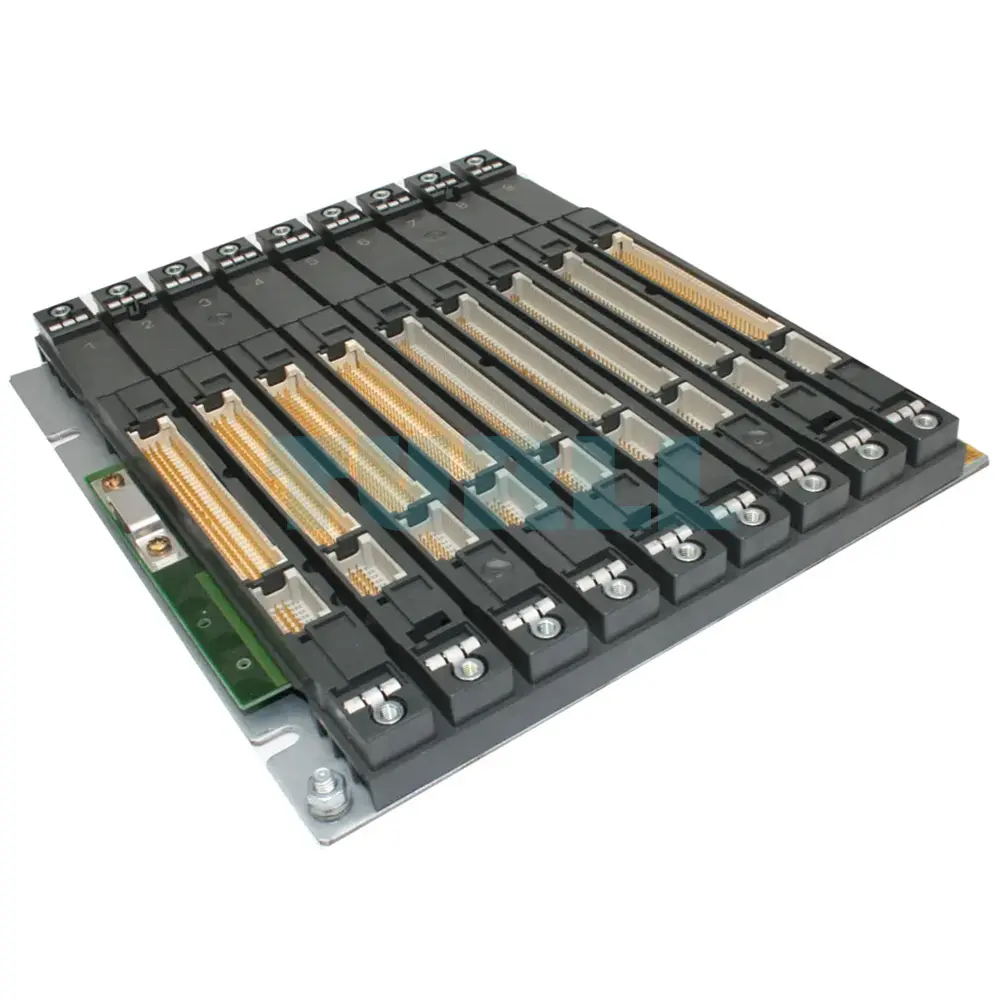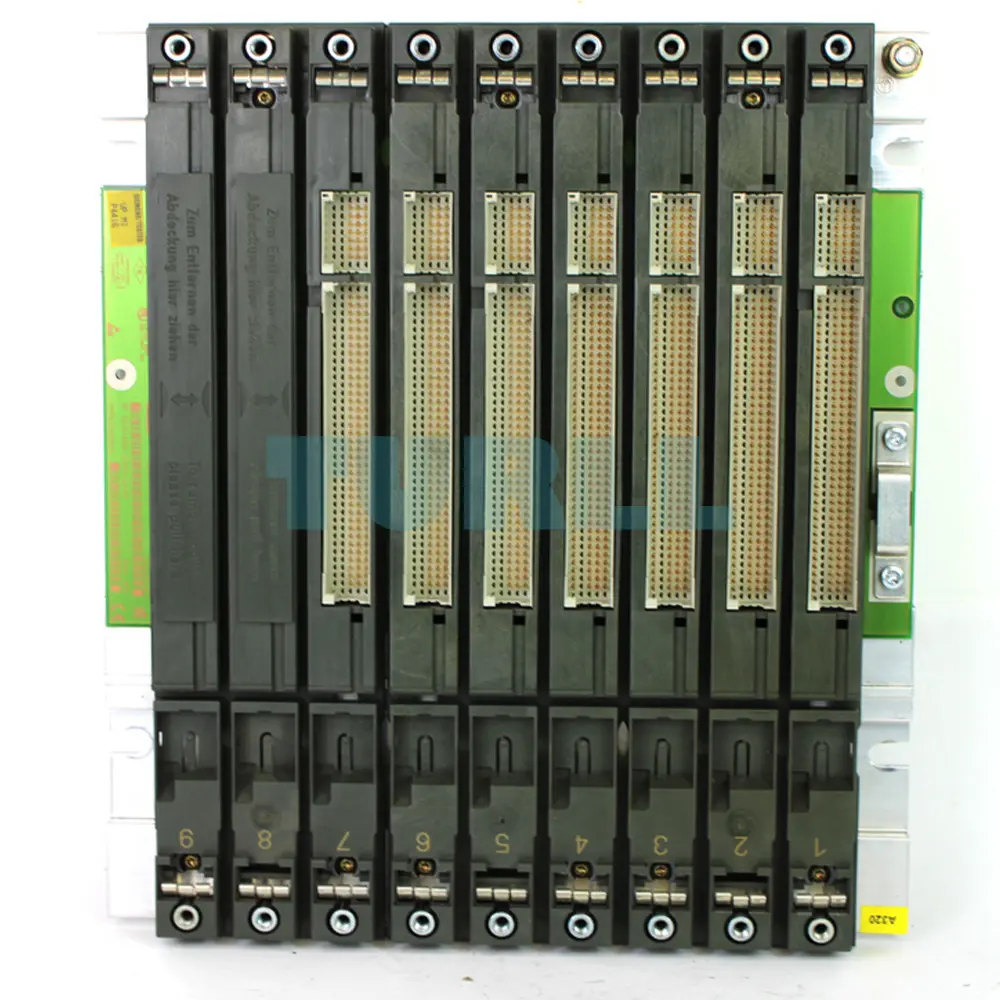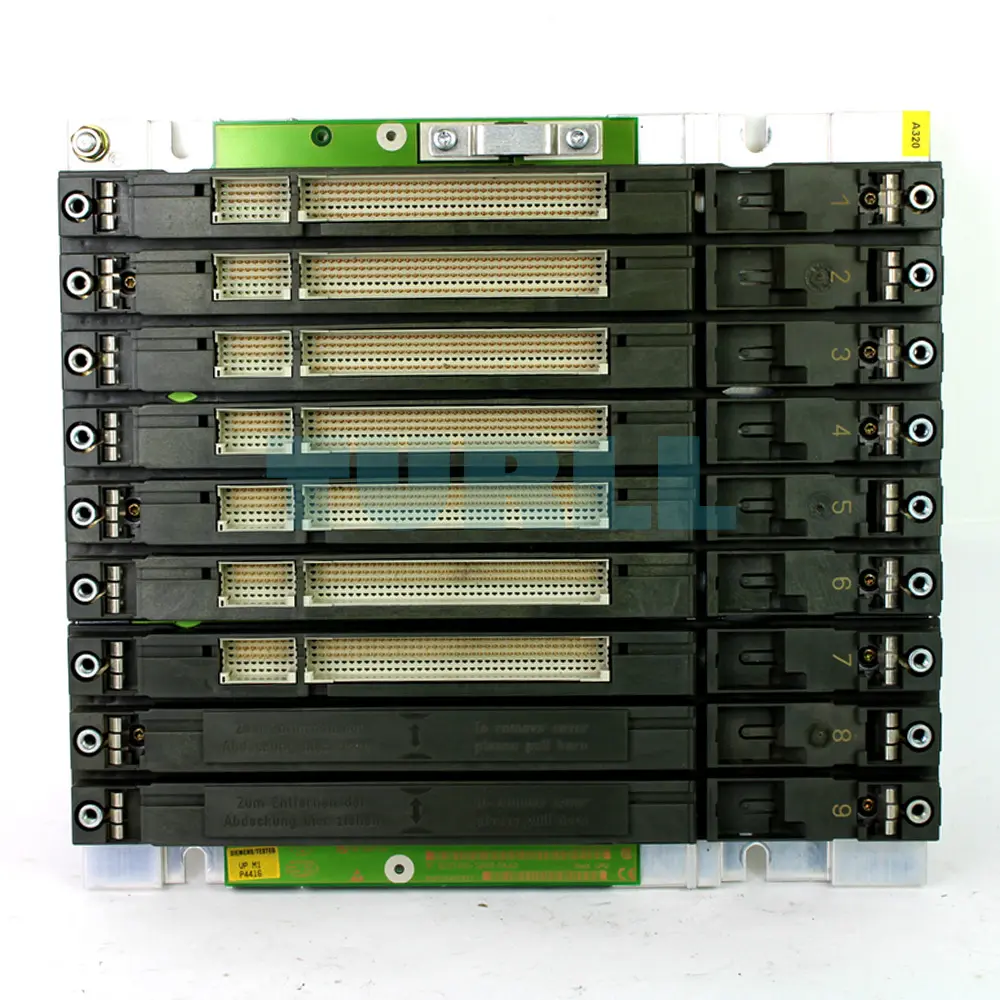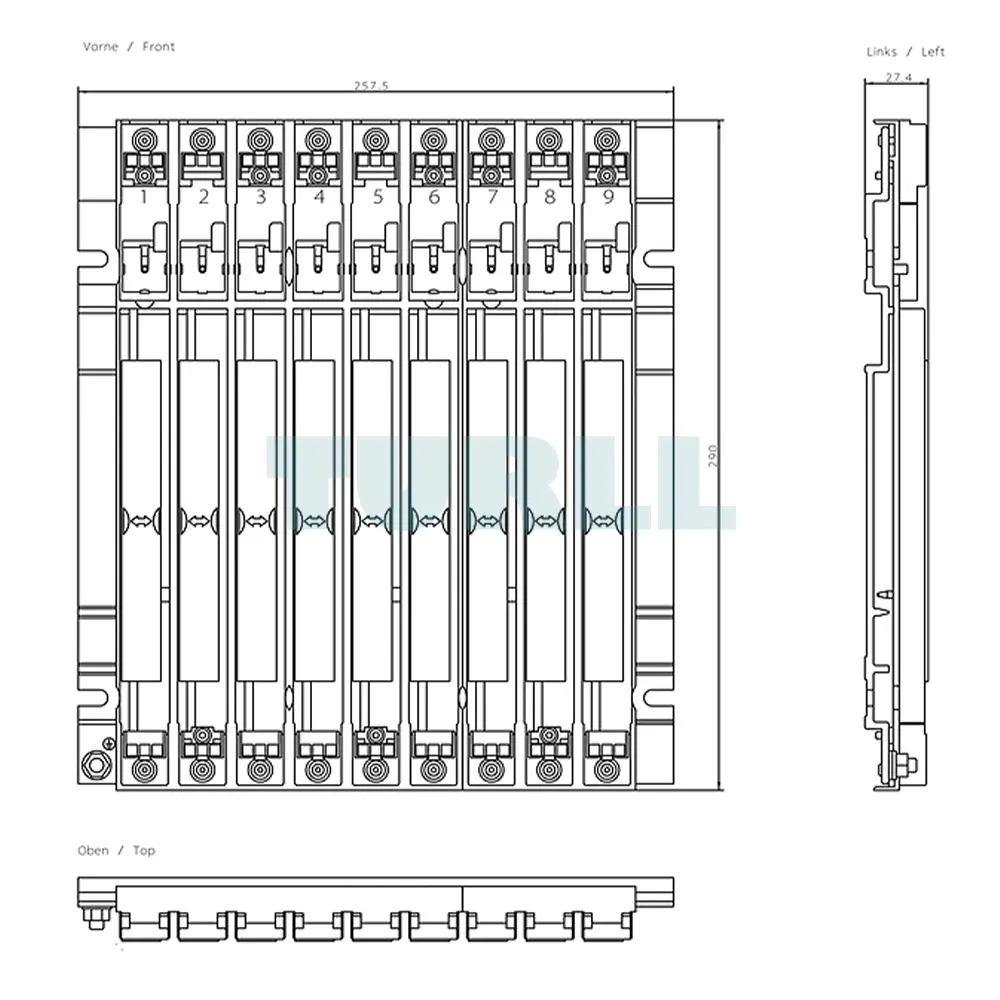
Overview
- The mechanical basic structure of SIMATIC S7-400/S7-400H
- For accommodating the modules, operating voltage supply, and connection of the modules via a backplane bus
- Several versions for setting up central controllers and expansion units
Application
The subracks form the basic mechanical framework of the SIMATIC S7-400. Their functions are as follows:
- Mechanical fixing of the modules
- Supplying the modules with the operating voltages
- Connecting the individual modules over the backplane bus
The subracks are designed for wall mounting and installation in frames and cabinets
Various subracks are available for setting up the SIMATIC S7-400.
UR1 (Universal Rack)
- For setting up central controllers and expansion units
- For holding up to 18 modules
- Also suitable for S7-400H
- Also available as aluminum rack
UR2 (Universal Rack)
- For setting up central controllers and expansion units
- For holding up to 9 modules
- Also suitable for S7-400H
- Also available as aluminum rack
CR2 (Central Rack)
- For setting up central controllers
- For holding up to 18 modules
- Segmented rack:
For operating two mutually independent S7-400 CPUs without S7-400 Multicomputing, but with communication between the CPUs over the backplane bus (C bus). Both CPUs can address their own local I/O modules (segmented P bus).
CR3 (Central Rack)
- For configuring central racks
- Optimized for distributed automation solutions due to holding up to 4 modules
UR2-H
- For configuring a complete S7-400H system in one subrack
- Also suitable for S7-400:
Operation of 2 separate CPUs with their own I/O (separate P and C buses) - Can also be used as an expansion unit
- For holding up to 18 modules
- Also available as aluminum rack
ER1 (Extension Rack)
- For setting up expansion units economically
- For holding up to 18 modules with restricted functionality
- Also suitable for S7-400H
- Also available as aluminum rack
ER2 (Extension Rack)
- For setting up expansion units economically
- For holding up to 9 modules with restricted functionality
- Also suitable for S7-400H
- Also available as aluminum rack
Design
All racks included:
- Mounting rail with threaded bolts for fixing the modules and lateral cutouts for mounting the rack
- Plastic parts serve as guides when swinging the modules into place
- Connection for protective conductors
- Backplane bus with plug-in connections
UR1 for central controllers
- 18 single-width slots
- Always required: Power module (PS) and one CPU
- Can be expanded centrally (up to 5Ā m) and in distributed configuration (up to 600Ā m)
- The following are required when expanded:
- Interface modules (send IMs); max. 6Ā interface modules can be plugged in
- Up to 21Ā expansion units can be connected
UR2 for central controllers
- 9 single-width slots
- Always required: Power module (PS) and one CPU
- Can be expanded centrally (up to 5Ā m) and in distributed configuration (up to 600Ā m)
- The following are required when expanded:
- Interface modules (send IMs); max. 6Ā interface modules can be plugged in
- Up to 21Ā expansion units can be connected
CR2 for central controllers
- 18 single-width slots; 2 segments with 8 or 10 slots
- Always required: Power module (PS) und 2 CPUs
- Can be expanded centrally (up to 5Ā m) and in distributed configuration (up to 600Ā m)
- The following are required when expanded:
- Interface modules (send IMs). Max. 6Ā interface modules can be plugged in
- Up to 21Ā expansion units can be connected.
- 2Ā CPUs can be operated next to each other, each with its own I/O:
2Ā P bus segments with 10 or 8Ā slots for 1Ā CPU each with its own I/O - C bus throughout: C bus nodes can be addressed from both segments.
CR3 for central controllers
- 4 single-width slots
- Always required: Power module (PS) and one CPU
- Can be expanded centrally (up to 5Ā m) and in distributed configuration (up to 600Ā m)
- The following are required when expanded:
- Interface modules (send IMs); max. 2Ā interface modules can be plugged in
- Up to 16Ā expansion units can be connected
- C bus and P bus throughout
UR2-H
- 18 single-width slots; 2 segments with 9 slots each
- Always required: 2 power modules (PS) und 2 CPUs
- Can be expanded centrally (up to 5Ā m) and in distributed configuration (up to 600Ā m)
- The following are required when expanded:
- Interface modules (send IMs); max. 6Ā interface modules can be plugged in
- Up to 21Ā expansion units can be connected
- 2Ā CPUs can be operated next to each other, each with its own I/O:
2Ā P bus segments and 2 C bus segments with 9Ā slots each for 1Ā CPU each with its own I/O - C bus throughout: C bus nodes can be addressed from both segments
UR1 for expansion units
- 18 single-width slots
- Always required: Interface module (receive IM)
UR2 for expansion units
- 9 single-width slots
- Always required: Interface module (receive IM)
ER1 for expansion units
- 18 single-width slots
- Always required: Interface module (receive IM)
- P bus with restricted functionality:
- No alarm processing
- No battery backup of the plugged-in modules
- No 24Ā V DC supply of the modules
- No C bus
- The following can be used:
- SM modules
- Receive IM
- Power supply module
ER2 for expansion units
- 9 single-width slots
- Always required: Interface module (receive IM)
- P bus with restricted functionality:
- No alarm processing
- No battery backup of the plugged-in modules
- No 24Ā V DC supply of the modules
- No C bus
- The following can be used:
- SM modules
- Receive IM
- Power supply module
6ES7400-1JA01-0AA0 Siemens
SIMATIC S7-400, rack UR2, central and distributed with 9 slots, 2 redundant PS can be plugged in


Reviews
There are no reviews yet.