SIEMENS
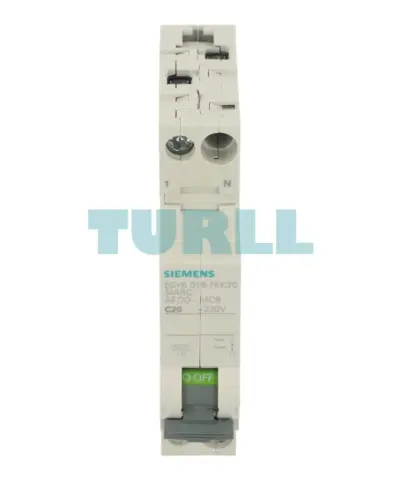
Siemens 5SV6016-7KK20 AFDD-MCB Combination 230V, 6kA, 1+N, C Curve, 20A Compact (1MW) Original Brand New
5SV6016-7KK20
$125.40
In stock
Siemens Motion Interpreter basic single runtime license for 1 CPU Download contains license certificate without software and documentation. Executable in SIMATIC technology CPUs. For execution, TIA Portal V19 or higher is required.
Siemens Motion Interpreter basic single runtime license for 1 CPU Download contains license certificate without software and documentation. Executable in SIMATIC technology CPUs. For execution, TIA Portal V19 or higher is required.
The SIMATIC Motion Interpreter of the CPU S7-1500T can be used to create motion tasks for single axes, coordinated axes, and kinematics with up to six interpolating axes. The motion tasks that you want the Interpreter to perform are contained in an Interpreter program, which is part of the Motion Interpreter. The Interpreter program and the cyclic user program of the machine are separate from each other. This means that the technological production process can be implemented without interfering with the cyclical user program of the machine and can be changed during ongoing machine operation.
The Interpreter program can be validated and simulated with an integrated digital twin independently of the user program, enabling parallel development of a customer machine and a fast time-to-market.
Requirements
Licenses
The SIMATIC Motion Interpreter is a product subject to licensing. A Runtime license is required for each technology CPU.
The processing of the motion jobs is started via the user program. The SIMATIC Motion Interpreter executes the motion tasks on the kinematics technology object and on the positioning axis technology object. The positioning axis is connected to the Interpreter via an Interpreter mapping.
The SIMATIC Motion Interpreter is designed as an Interpreter technology object. The Interpreter technology object is controlled by instructions from the user program. The predefined clipboard of the Interpreter technology object enables the exchange of variables between the user program and the Interpreter program.
The Interpreter program is created in the Interpreter program technology object.
The Interpreter mapping technology object permits access to technology objects and PLC variables.
The functions of the SIMATIC Motion Interpreter can be tested with SIMATIC S7-PLCSIM or SIMATIC S7-PLCSIM Advanced.
An Interpreter is a program that directly executes instructions from a programming or script language without first compiling them into a machine language program. For the Interpreter, a wide range of technological tasks can be created textually in the high-level language Motion Control Language (MCL).
Motion sequence
A motion sequence is the term used to describe several overlapping motion tasks. A motion task that does not overlap with either the previous or subsequent motion task is a separate motion sequence.
Program preparation
The Interpreter technology object interprets the jobs from the loaded Interpreter program, adds the jobs to the Interpreter job sequence, and prepares them. When loading the Interpreter program and during program execution, the Interpreter prepares the jobs in advance.
Program execution
During program execution, the technology object Interpreter or the technology objects controlled by the Interpreter execute the jobs that have already been prepared.
Synchronized action
A synchronized action is a job that runs in parallel with other jobs, such as opening a gripper during a kinematic motion.
Motion Control Language (MCL)
Motion Control Language (MCL) is an interpretive programming language for specifying motion jobs. The language is based on the Structured Text (ST) programming language specified in EN 61131-3 (IEC 61131-3). The structure of MCL includes a number of motion and technology-specific extensions:
Visit 6ES7823-0SJ00-1AA0
For more our products visit turll.com
| SKU / Model | 6ES7823-0SJ00-1AA0 |
|---|---|
| Weight | 0.001 kg |
| Dimensions | 1 × 1 × 1 mm |
Request a quote for project quantities, discontinued or obsolete models, and pro-forma invoice / bank transfer orders. Our sourcing team responds fast.