SIEMENS
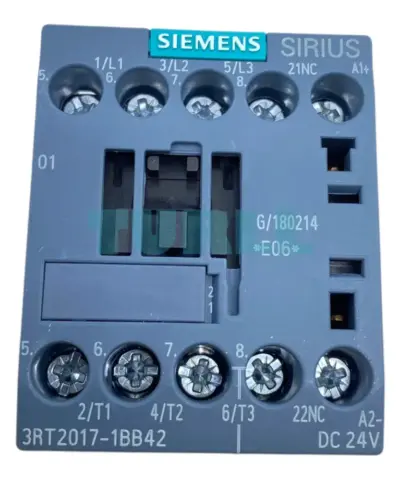
Siemens 3RT2017-1BB42 Power Contactor 12A, 3-Pole, 24V DC, 5.5kW/400V Original Brand New
3RT2017-1BB42
Original price was: $113.30.$63.38Current price is: $63.38.
In stock
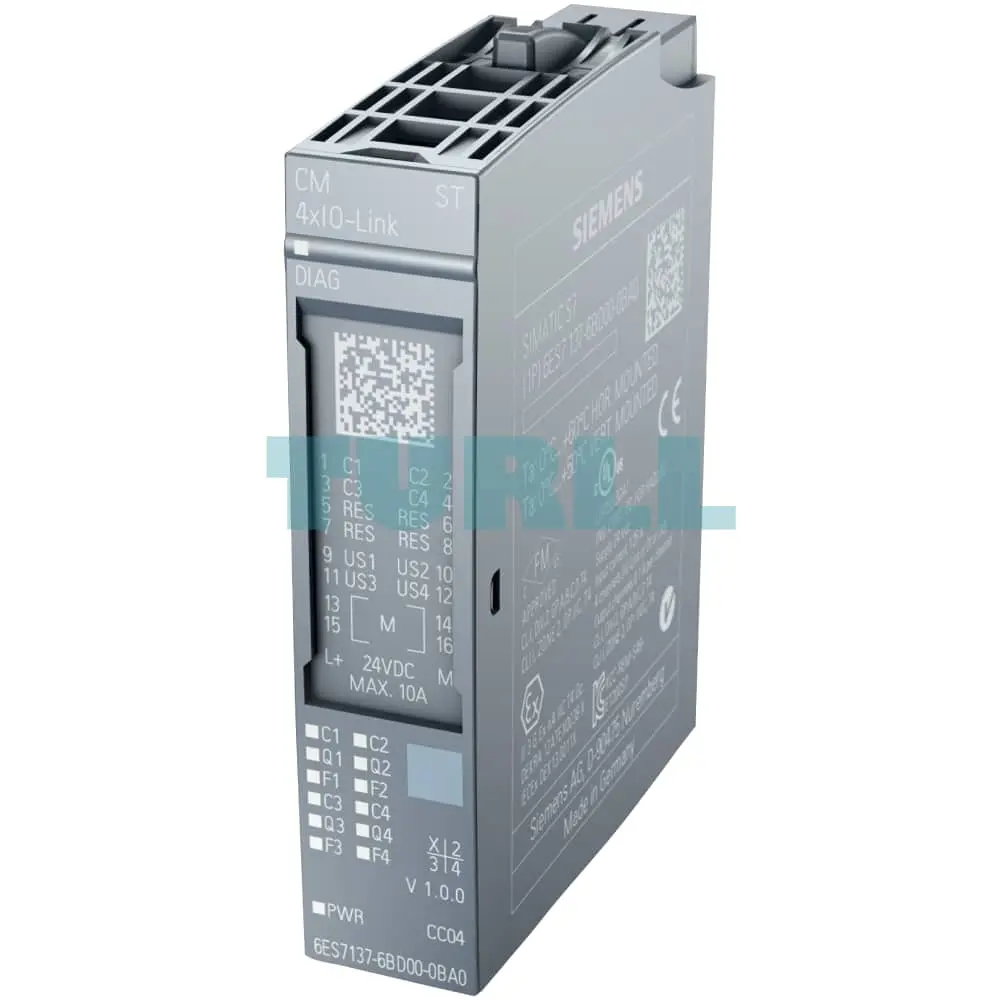
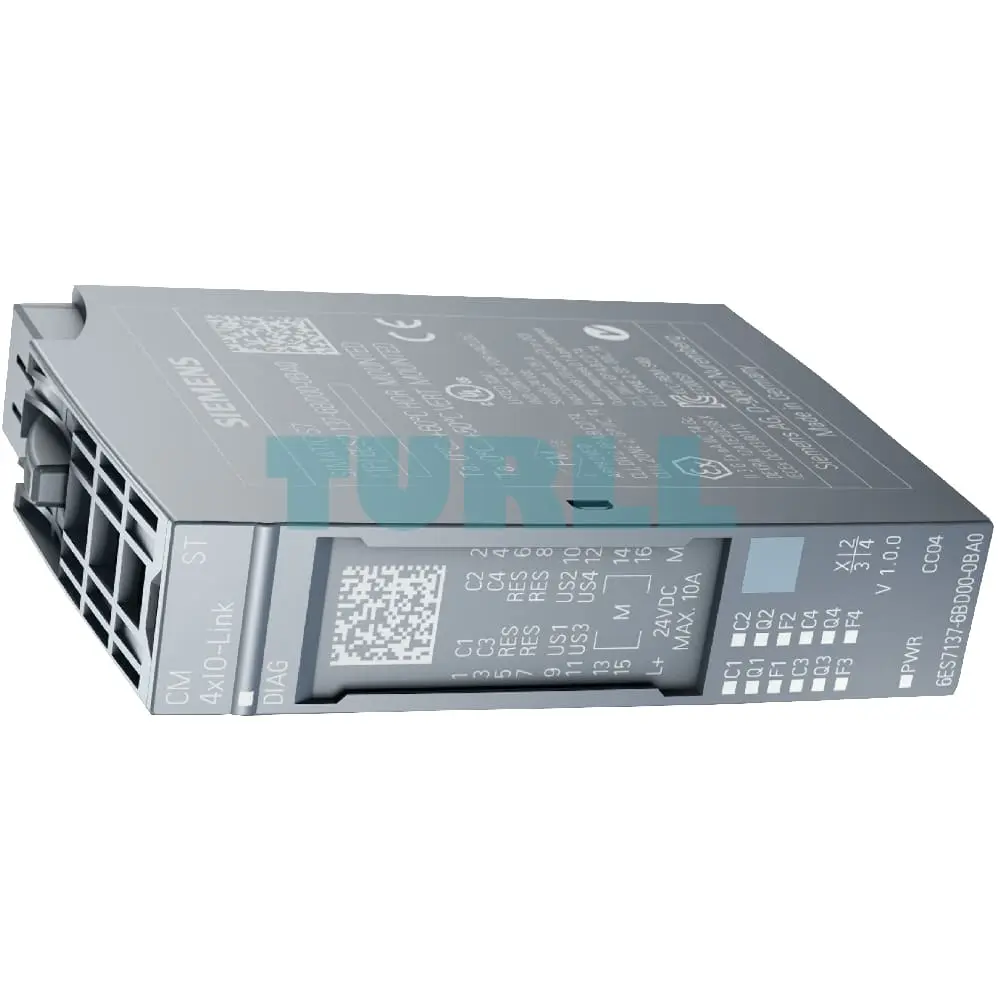
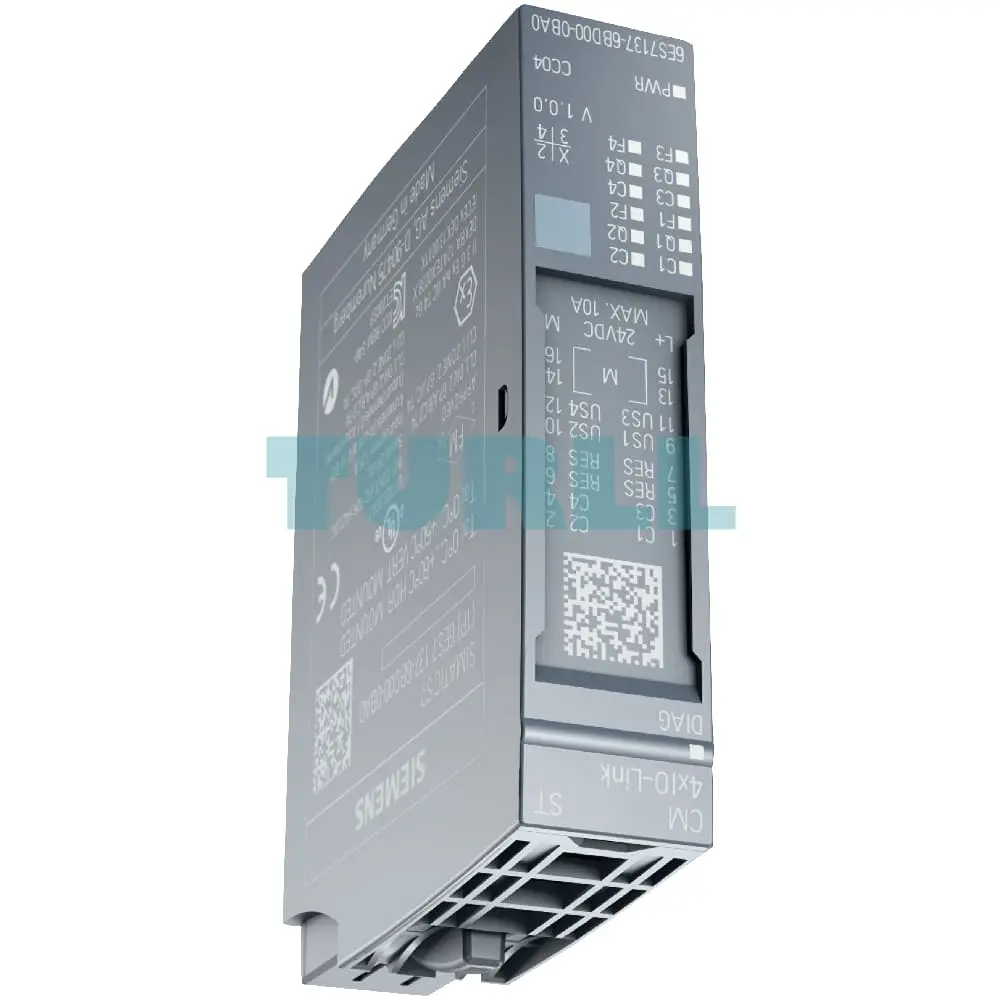
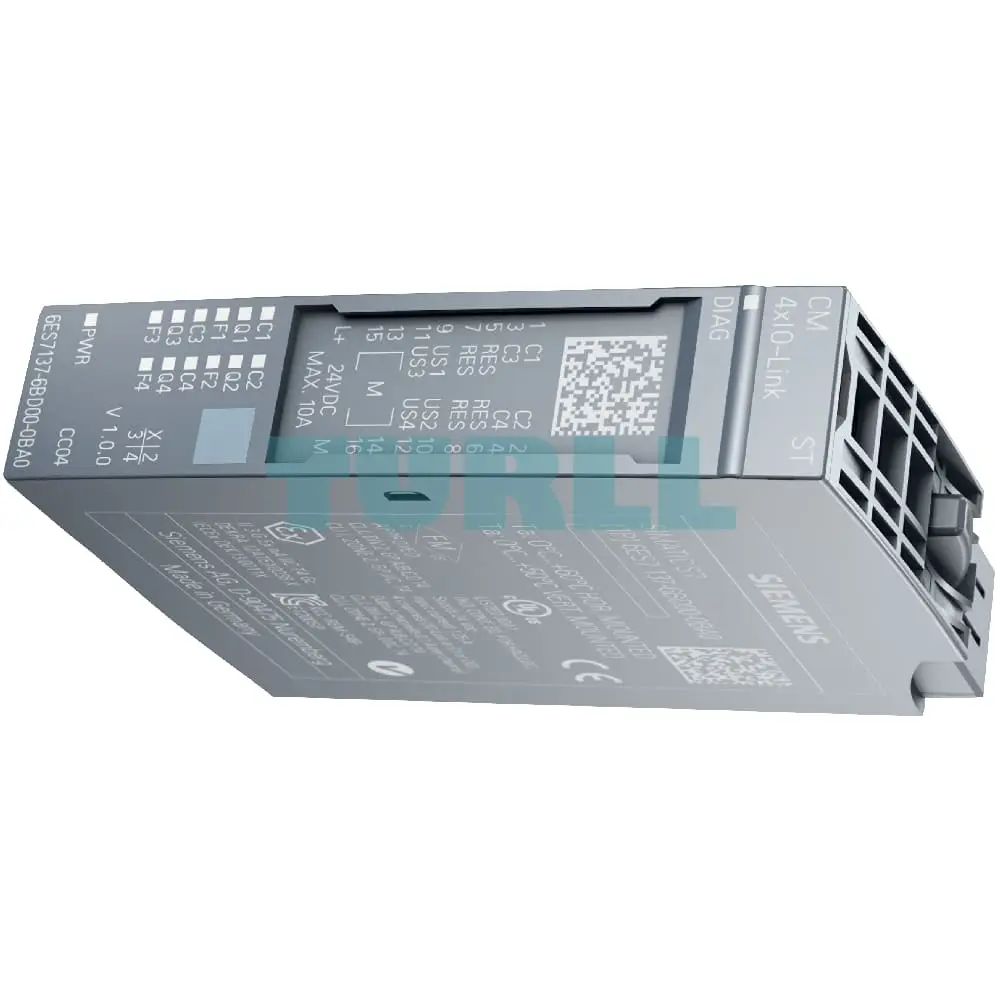
Siemens SIPLUS ET 200SP CM 4xIO-LINK based on 6ES7137-6BD00-0BA0 with conformal coating, -40…+60 °C, communication module IO-Link master V1.1
Backorder available · Factory lead time 2–3 weeks.
All BUs of type A0 are available for the communications module CM 4x IO-Link.
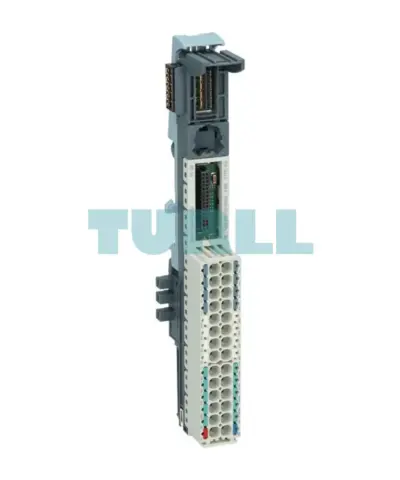
A light-colored BU separates the self-assembling, internal voltage buses (P1, P2, AUX) and thus opens a new load group. The supply voltage of a load group must be fed in at the light BU of this load group.
A dark BU forwards the supply voltage of the adjacent light BU on the left via the self-assembling voltage buses P1, P2 and AUX. A new infeed is therefore only required on the next light BU to the right. The setting of a further light BU is required whenever
The potentials at the terminals of the BaseUnit are defined by the inserted I/O module in each case. To prevent wiring faults, the potentials of the terminals can optionally be identified by means of module-specific color-coded labels. The color-coded label that matches the respective I/O module is defined by the color code CCxx of the I/O module. This color code is also printed on the front of the module.
For the communications module "CM 4x IO-Link", the color-coded label with the color code CC04 is to be used.
In BaseUnits with the additional ten internally jumpered AUX terminals, these can also be identified with color-coded labels. For the ten AUX terminals, color-coded labels are available in red, blue, and yellow/green.
Labeling strips
Labeling strips can be inserted on the front of the interface modules or I/O modules and individually labeled via STEP 7, macros, etc. No special additional holder is required. If required, they can be easily replaced with the component.
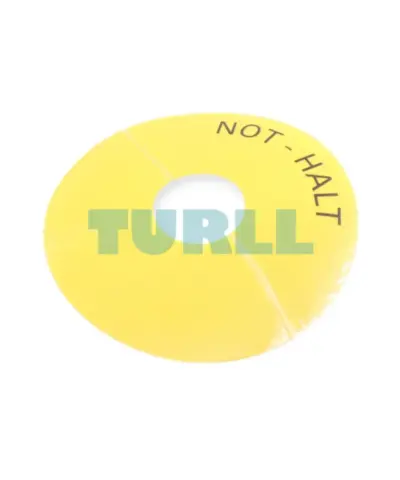
Equipment labeling plates
Equipment labeling plates enable the equipment to be easily identified (e.g. compliant with EN 81346). They are easily plugged onto the required component (interface modules, I/O modules and BaseUnits) and when required, they can be easily replaced with the component.
The following labeling components are available:
For the space-saving and EMC-optimized connection of cable shields, a shield connection is available that is quick and easy to mount. This consists of one shield connection element that can be plugged onto the BaseUnit and one shield terminal for each module. The low-impedance connection to the functional ground (DIN rail) is achieved without any additional wiring by the user.
Siemens SIPLUS ET 200SP CM 4xIO-LINK based on 6ES7137-6BD00-0BA0 with conformal coating, -40…+60 °C, communication module IO-Link master V1.1
Visit 6AG1137-6BD00-2BA0
For more our products visit turll.com
| SKU / Model | 6AG1137-6BD00-2BA0 |
|---|---|
| Weight | 0.041 kg |
| Dimensions | 70 × 77 × 24 mm |
Request a quote for project quantities, discontinued or obsolete models, and pro-forma invoice / bank transfer orders. Our sourcing team responds fast.