[ez-toc]
Overview
- The compact CPU with integral digital and analog inputs/outputs and technological functions
- High processing performance in binary and floating-point arithmetic
- For connecting distributed I/O via PROFIBUS and PROFINET
- Combined MPI/PROFIBUS DP master/slave interface
- PROFINET interface with 2-port switch
- PROFINET IO controller for operating distributed I/O on PROFINET
- PROFINET I-Device for connecting the CPU as an intelligent PROFINET device under a SIMATIC or non-Siemens PROFINET IO controller
- Component-based Automation (CBA) on PROFINET
- PROFINET proxy for intelligent devices on PROFIBUS DP in Component-based Automation (CBA)
- Integrated web server with the option of creating user-defined web pages
- Isochronous mode on PROFINET
SIMATIC Micro Memory Card required for operation of CPU.
Application
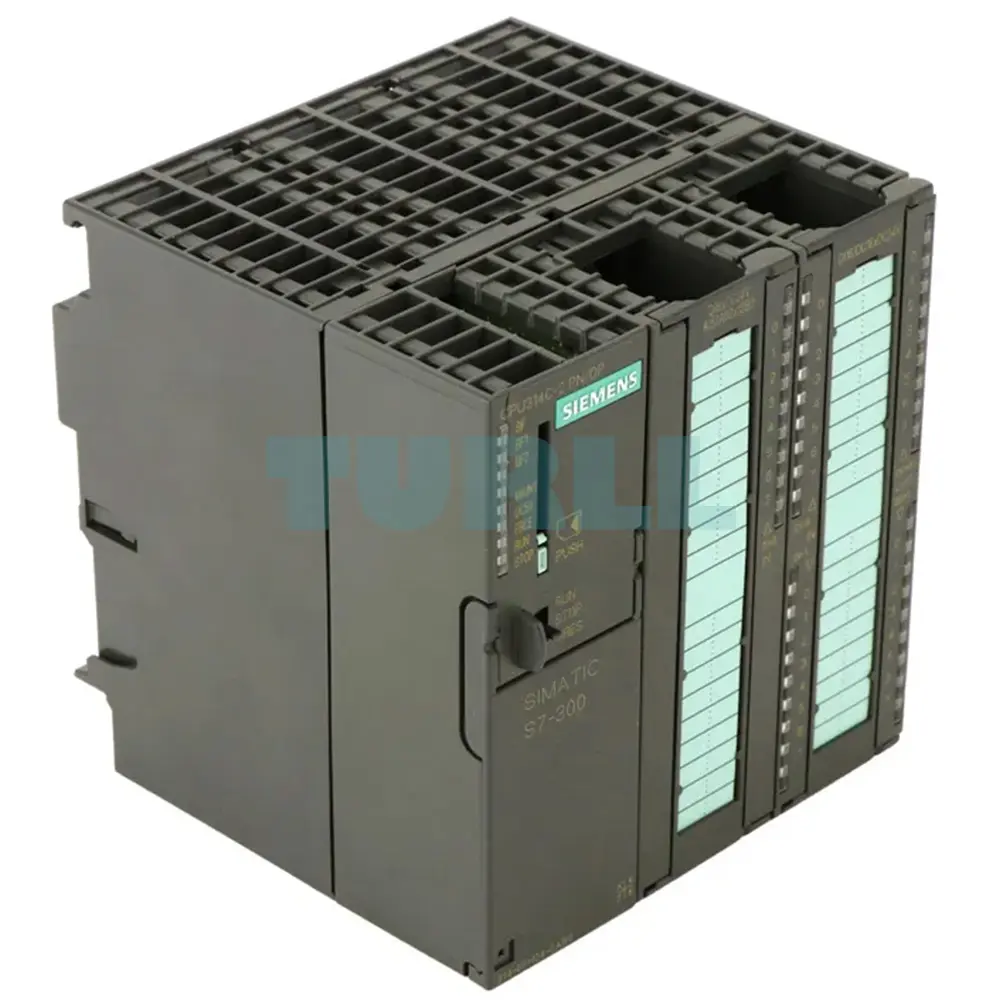
The CPU 314C-2 PN/DP is the compact CPU for plants with a distributed structure. With its extended main memory, this compact CPU is also suitable for medium-sized applications. Integrated digital and analog inputs/outputs permit direct connection to the process. The integrated PROFIBUS DP master/slave and PROFINET IO Controller/I-Device interfaces allow the connection of distributed I/O sections over PROFIBUS and PROFINET. This allows the CPU 314C-2 PN/DP to be used as a distributed unit for high-speed preprocessing, and as a higher-level controller with a lower-level fieldbus system on PROFIBUS and PROFINET.
Other possible uses result from the integrated technological functions:
- Counting
- Frequency measurement
- Period measurement
- Pulse width modulation
- PID control
- Controlled positioning
Design
The CPU 314C-2 DP is equipped with the following:
- Microprocessor;
the processor achieves an execution time of approximately 60 ns per binary instruction and 0.59 µs per floating-point operation. - Extensive memory;
192 KB high-speed work memory (equals approx. 64 K instructions) for program sections relevant to execution offer user programs sufficient memory space;
SIMATIC Micro Memory Cards (max. 8 MB) as load memory for the program also allow the project to be stored in the CPU (complete with symbols and comments). - Flexible expansion capability;
max. 31 modules, (4-tier configuration) - Multi-point interface (MPI);
the integrated MPI can establish connections to the S7-300/400 (up to 12 simultaneously), or to programming devices, PCs, OPs. Of these connections, one is always reserved for programming devices and one for OPs. The MPI makes it possible to set up a simple network with a maximum of 16 CPUs via “global data communication”. - PROFIBUS DP interface:
The CPU 314C-2 PN/DP with PROFIBUS DP master/slave interface allows a distributed automation configuration offering high speed and ease of use. From the user perspective, the distributed I/O is treated as central I/O (same configuring, addressing and programming). - Ethernet interface;
the second integral interface of the CPU 314C-2 PN/DP is a PROFINET interface with 2-port switch, based on Ethernet TCP/IP.
It supports the following protocols:- S7 communication for data exchange between SIMATIC PLCs;
- Programming device/OP communication for programming, commissioning and diagnostics via STEP 7;
- Programming device/OP communication for interfacing to HMI and SCADA;
- Open TCP/IP, UDP and ISO-on-TCP (RFC1006) communication via PROFINET;
- SIMATIC NET OPC Server for communication with other controllers and I/O devices with integral CPU
- Integrated inputs/outputs;
24 digital inputs (all for alarm processing) and 16 digital outputs as well as 5 analog inputs and 2 analog outputs make the CPU 314C-2 DP a fully-fledged PLC.
Function
- Password protection;
a password concept protects the user program from unauthorized access. - Block encryption;
the functions (FCs) and function blocks (FBs) can be stored in the CPU in encrypted form by means of S7-Block Privacy to protect the know-how of the application. - Diagnostics buffer;
the last 500 error and interrupt events are stored in a buffer for diagnostic purposes. Of these, the last 100 entries are retentive. - Maintenance-free data backup;
the CPU automatically saves all data (up to 64 KB) in case of a power failure so that the data are available again unchanged when the power returns.
Parameterizable properties
The S7 configuration as well as the properties and response of the CPUs can be parameterized using STEP 7:
- General:
Definition of the name, plant designation and location designation. - Startup;
definition of the startup characteristics of the CPU and the monitoring time - Synchronous cycle interrupts;
setting of IO system number, process image partition number, and delay time - Cycle/clock memory;
specification of the maximum cycle time and load. Setting of the clock memory address. - Retentivity;
definition of the number of retentive bit memories, counters, timers and data blocks - Clock interrupts;
setting the start date, start time and periodicity - Watchdog interrupts;
setting of periodicity - System diagnostics;
determining handling and scope of the diagnostic alarms - Clock;
setting the type of synchronization in the AS or on the MPI - Protection level;
specifying the access rights to program and data - Communication;
reservation of connection resources - Web;
settings for the Web server of the CPU - MPI/PROFIBUS DP interface;
setting the interface type. Determining node addresses. Parameterizing the operating mode and configuring the transfer areas in the case of PROFIBUS DP. Parameterizing the time synchronization - PROFINET interface;
setting the addresses. Parameterizing the PROFINET properties, the I-Device functionality, the type of synchronization on PROFINET, the time synchronization using NTP procedure, the media redundancy, and the KeepAlive function. Assigning parameters to Port 1 and Port 2. - Digital inputs/outputs;
setting of addresses, input delay and process interrupt - Analog inputs/outputs;
setting of addresses;
in the case of inputs: Setting the temperature unit, the measurement type, the measuring range, and the interference frequency;
in the case of outputs: Setting the output type and output range - Integrated function “counting”;
setting the addresses, parameter assignment of the modes “continuous counting”, “single counting”, “periodic counting”, “frequency measurement” and “pulse width modulation” - Integrated function “positioning”;
setting of addresses, parameterizing of “positioning with digital outputs” and “positioning with analog outputs” - Integrated “Rules” function
Display and information functions
- Status and error indications;
LEDs indicate hardware, programming, time or I/O errors, for example, and operating statuses such as RUN, STOP and start-up. - Test functions;
the PG is used to indicate signal states during program execution, to modify process variables independently of the user program and to output the contents of stack memories. - Information functions;
you can use the PG to obtain information about the storage capacity and operating mode of the CPU as well as the current loading of the main and load memories as well as current cycle times and diagnostic buffer contents in plain text.
Integrated communication functions
- PG/OP communication
- Global data communication
- S7 basic communication
- S7 communication
- Routing
- Data record routing
- PROFIBUS DP master/slave
- Open communication over TCP/IP, ISO-on-TCP and UDP
- PROFINET IO Controller
- PROFINET I-Device
- PROFINET CBA
- Web server
Integrated functions
- Counters;
4 counters (up to 60 KHz) with direction-dependent comparators, and for direct connection of 24V incremental encoders - 4 channels for frequency measurement;
frequency measurement (up to max. 60 kHz) enables, for example, speed measurement of a shaft with speed range monitoring or throughput measuring (parts per measuring time) with range monitoring. - Period measurement;
the period duration of the counting signal can be measured up to a counting frequency of 1 kHz - Pulse width modulation;
4 outputs for direct control of valves, final controlling elements, switching devices, heating equipment, etc., switching frequency 2.5 kHz. The period length can be set and the pulse-pause ratio can be changed while running. - Controlled positioning;
an SFB integrated into the operating system enables an axis to be positioned via 2 digital outputs or one analog output. - Alarm inputs (all digital inputs);
the alarm inputs enable the detection of process events as well as the rapid triggering of responses.
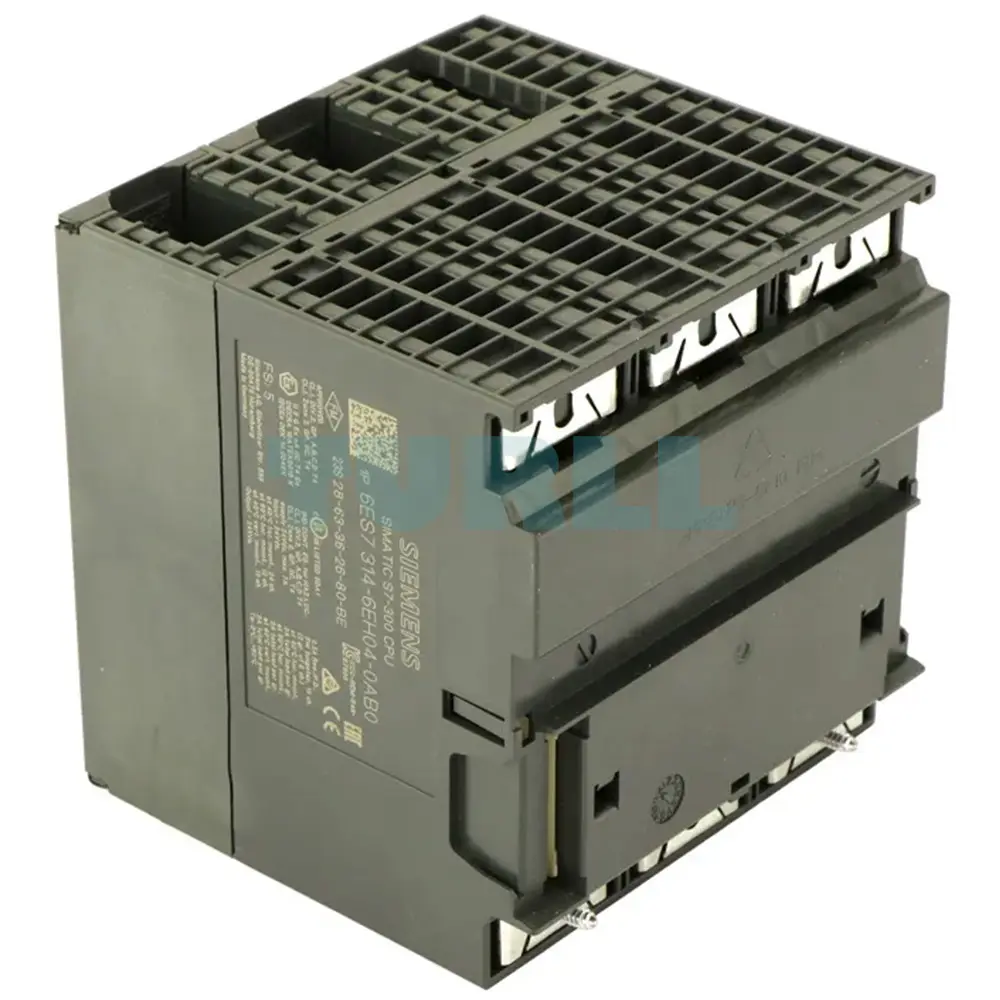
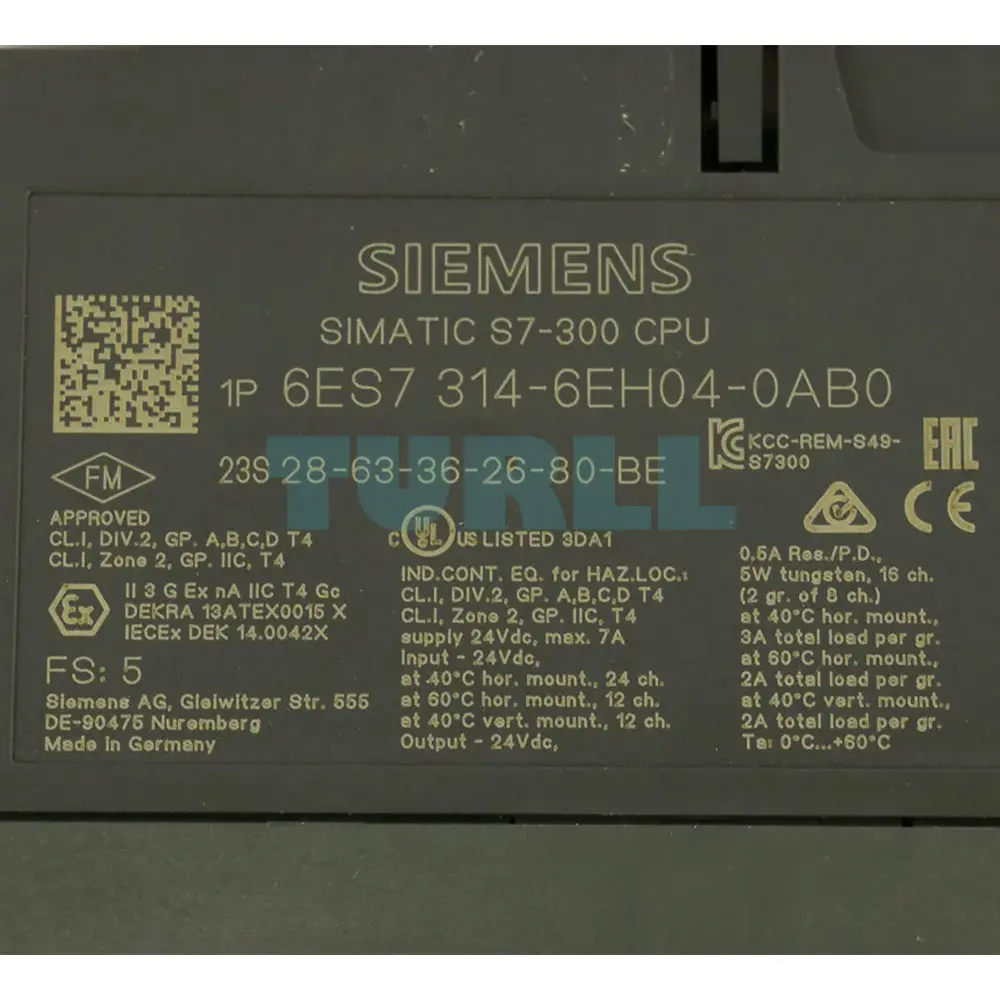
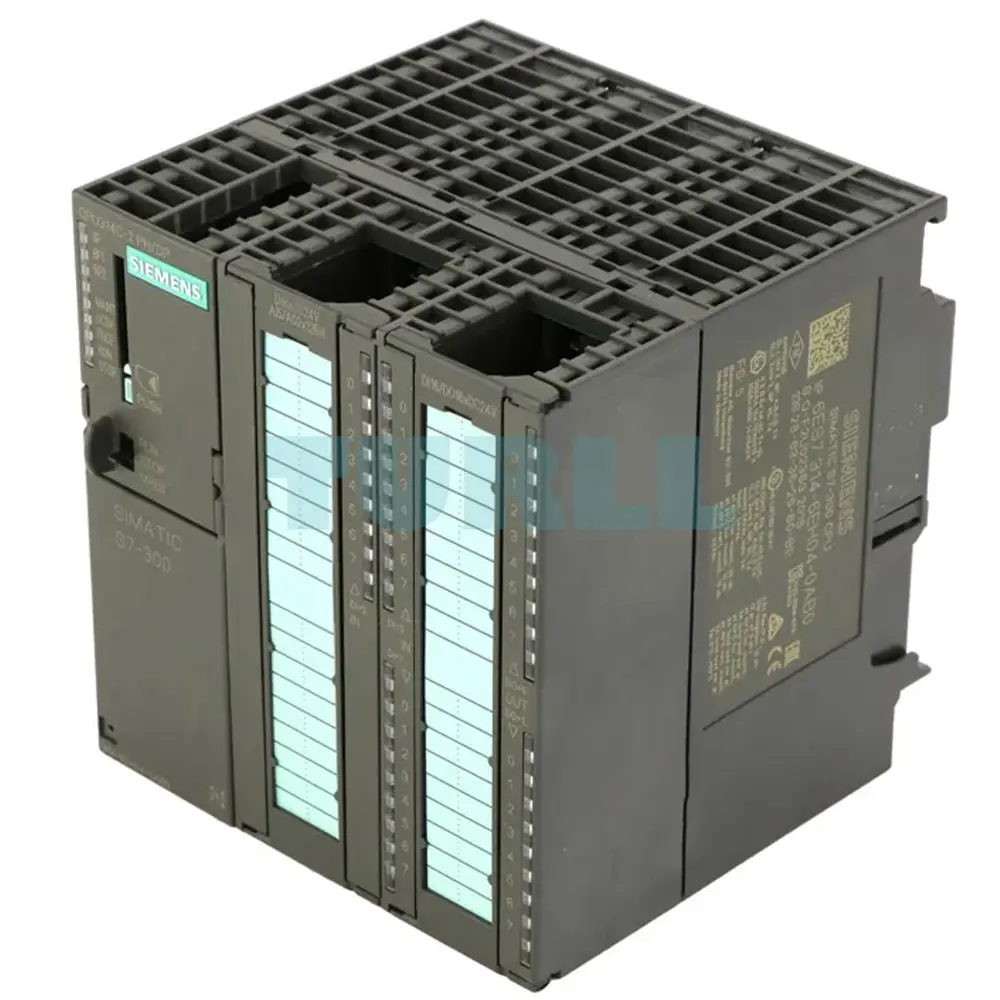
6ES7314-6EH04-0AB0
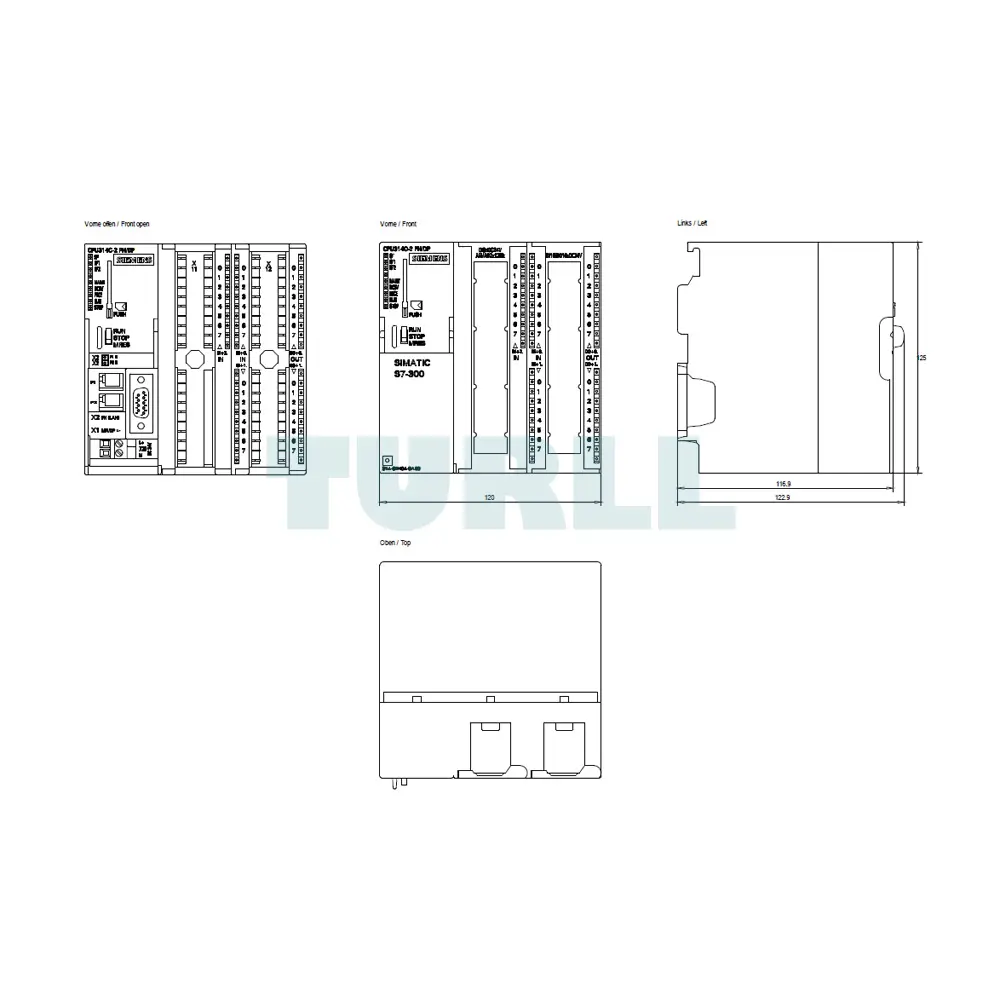
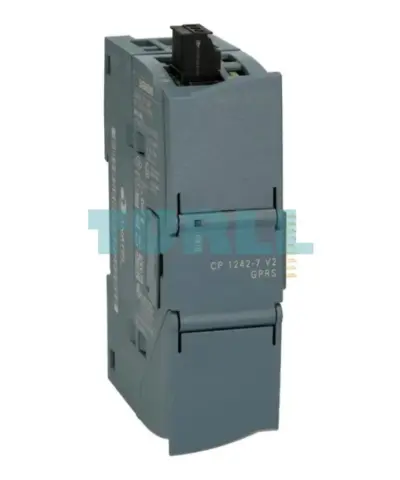
Siemens SIMATIC S7-300, CPU 314C-2PN/DP Compact CPU with 192 KB work memory, 24 DI/16 DO, 4 AI, 2 AO, 1 Pt100, 4 high-speed counters (60 kHz), 1st interface MPI/DP 12 Mbit/s, 2nd interface Ethernet PROFINET, with 2-port switch, Integr. power supply 24 V DC, Front connector (2x 40-pole) and Micro Memory Card required.
Visit 6ES7314-6EH04-0AB0
For more our products visit turll.com


Reviews
There are no reviews yet.